Suche
Newsletter abonnieren
News
Branchenverzeichnis


Sonderhefte/Specials

Shuttle-Profis


Wooden pallets in global trade: What is behind the 80 percent figure

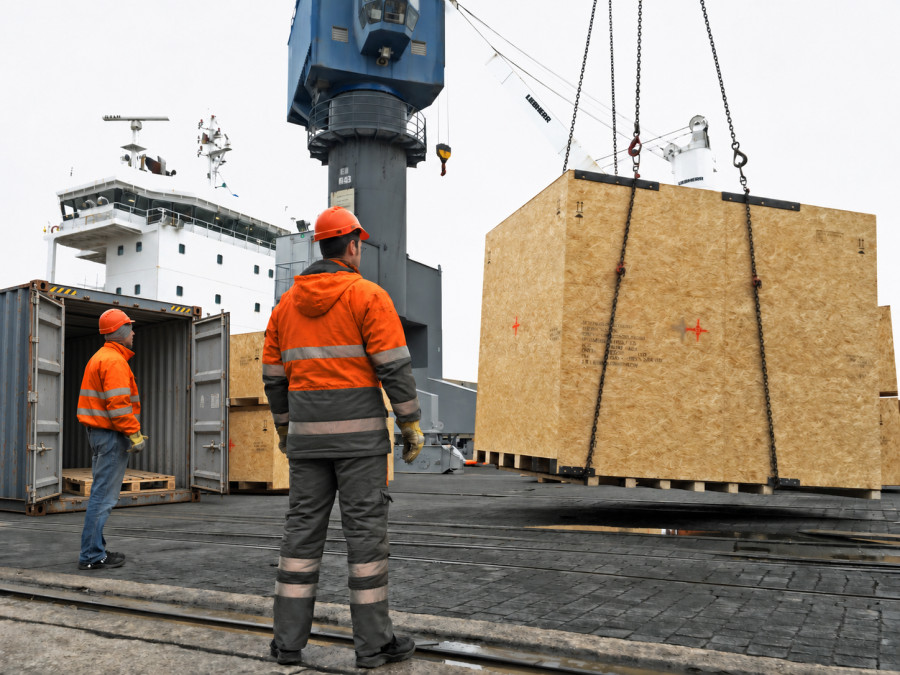
Wood Packaging: German Manufacturers Produced Nearly 100 Million Pallets in 2025
Wood pallets, shipping crates, and transport floors are integral components of numerous industrial and international supply chains. According to the German Association for Wood Packaging, Pallets, Export Packaging (HPE), wood packaging is used in around 80 percent of global goods deliveries. In Germany, manufacturers produced nearly 100 million pallets in 2025. In addition to new production, the reuse and repair of used load carriers play a role in supplying logistics with transport packaging.
Wood packaging performs various tasks in the transportation, storage, and handling of goods. Pallets enable the bundling and handling of products, while shipping crates protect sensitive products. Transport floors serve primarily as substructures for heavy loads. These packaging solutions are used, for example, in food supply, the automotive industry, and mechanical engineering, according to an HPE report.
Custom Packaging for Heavy and Sensitive Goods
The requirements for transport packaging vary depending on the nature and application of the goods. While many products can be transported on standardized pallets, large machines and sensitive plant components often require custom-made packaging solutions.
When designing these solutions, packaging companies particularly consider the weight and dimensions of the freight as well as the intended transport route. Based on this, they determine the construction of transport crates and transport bases. The goal is to adequately protect the goods during transportation, storage, and handling, and to ensure their safe handling.
Packaging planning also includes distributing the loads that occur and securing the transported goods against shifting. Depending on transport conditions, additional protective measures may be required. These include especially precautions against moisture and corrosion. Thus, in addition to the manufacture of wooden structures, packaging companies also take on tasks related to the technical design and securing of the transport goods.
Nearly 100 million pallets produced in 2025
According to HPE, German wooden packaging manufacturers produced nearly 100 million pallets in 2025. However, new production forms only part of the supply of wooden load carriers. In addition, used pallets are reused and repaired if necessary.
Before being used again, specialist companies check the condition of the returned pallets. Necessary repairs then allow for further use. Other wooden packaging can also undergo several usage cycles in this way. The reuse thus complements the ongoing production of new transport packaging. Which wooden packaging can be reused depends on its respective condition and any potential need for repair.
Return network for used wooden packaging
To return used load carriers, the industry association operates the nationwide network “HPECycle”. Companies can hand over used pallets and other wooden packaging to participating specialist companies.
The affiliated businesses check whether the returned packaging can be immediately reused or needs to be repaired first. Subsequently, suitable wooden packaging can be used again. According to the association, the return network complements the recycling systems already in place within the industry.
For wooden packaging that can no longer be used as transport packaging, there are also possibilities for material recycling. Suitable waste wood can be used, for example, to produce pallet blocks or chipboard. This allows the material to be used as a raw material for other products even after the end of its original use.
Wooden packaging materials support transport and cargo handling
The importance of transport packaging is evident throughout the entire supply chain. Produced goods must first be prepared for transport, possibly stored temporarily, and handled at various transfer points before reaching their destination.
This includes, for example, machines transported from manufacturer to customer, components for industrial processing, and food products for trade. The load carriers and packaging used must meet the requirements of the goods and the intended transport processes.
Disruptions in international supply chains, such as blocked sea routes or pandemic-related restrictions, also highlight the dependencies between production, transport, and goods supply, according to the association. The availability of suitable pallets and transport packaging is therefore a prerequisite for the execution of downstream logistics processes.
Since 1869, the HPE has represented the interests of more than 430 predominantly owner-managed companies in the wooden packaging industry at both the German and European levels. The fields of activity of its member companies include the production of pallets, crates, and export packaging, as well as services related to packaging, container stowage, and logistics.
Translated automatically from German.
Branchenverzeichnis