Suche
Newsletter abonnieren
News
Branchenverzeichnis


Sonderhefte/Specials

Shuttle-Profis


Integrative Intralogistics: Everything connected: From the floor to the shelf to the dashboard

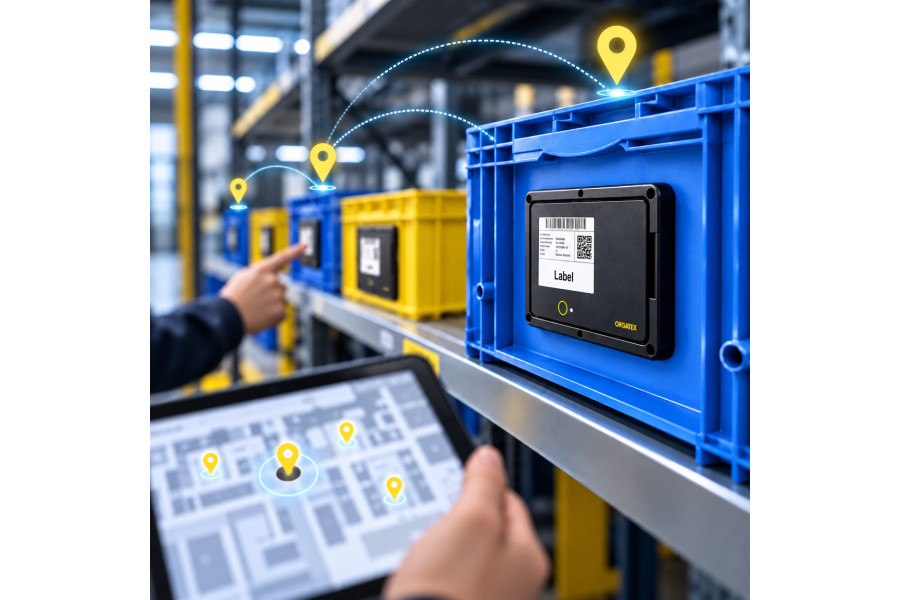
The integrative intralogistics is a planning approach where analog and digital solutions are connected in such a way that a unified system landscape is created, in which each element has a clearly defined role. The solutions are not developed as standalone worlds but are integrated into the existing customer processes. If a company has a warehouse management system, it is not there without reason. It remains the leading system. In an integrative approach, a cloud supplements this leading system via open interfaces. Sensor data and process signals from the shop floor flow to where they are needed: into the ERP, the WMS, or an overarching dashboard.




Interfaces Do Not Start with Software
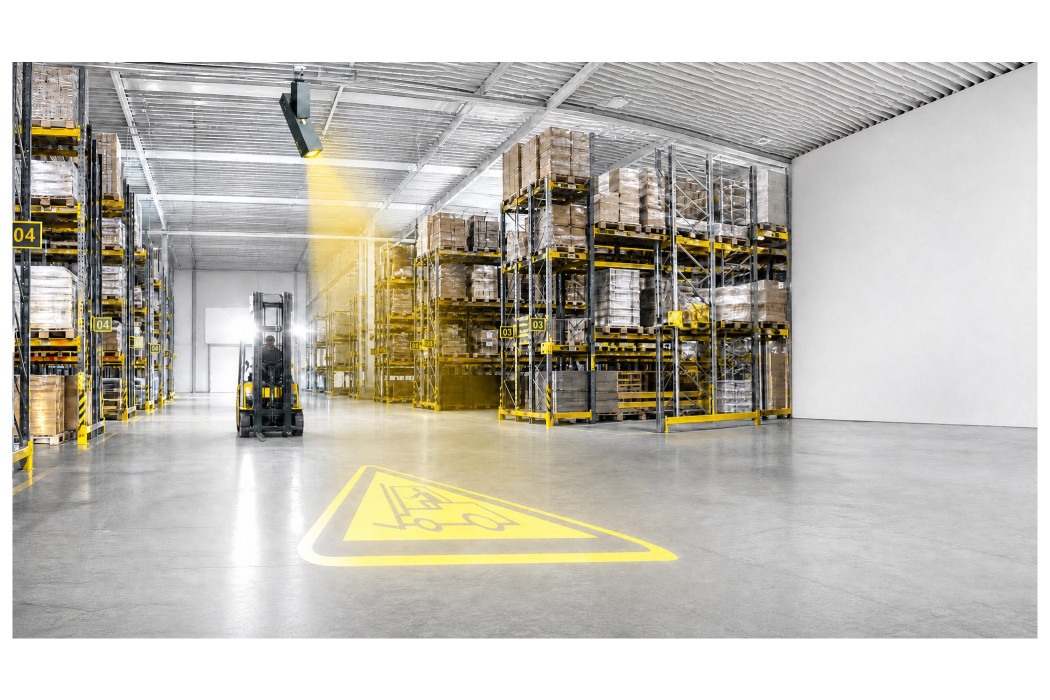
Integration is often understood as purely an IT topic. However, for material flow, it starts earlier, within the hall itself. A safety area that is marked in red and white analogically must have the same significance in digital projection. As soon as physical marking and digital representation use different designations, colors, or status logics, a manual transfer of information by employees is required. This media break is one of the most common sources of error in operational material flow. The uniform meaning of signs should be understood as a consistent process logic. Color concepts must be uniformly recognizable in both the analog and digital product areas. A safety sign that is red and white is regarded the same way in both the digital projection and the analog sign on the entire shop floor.
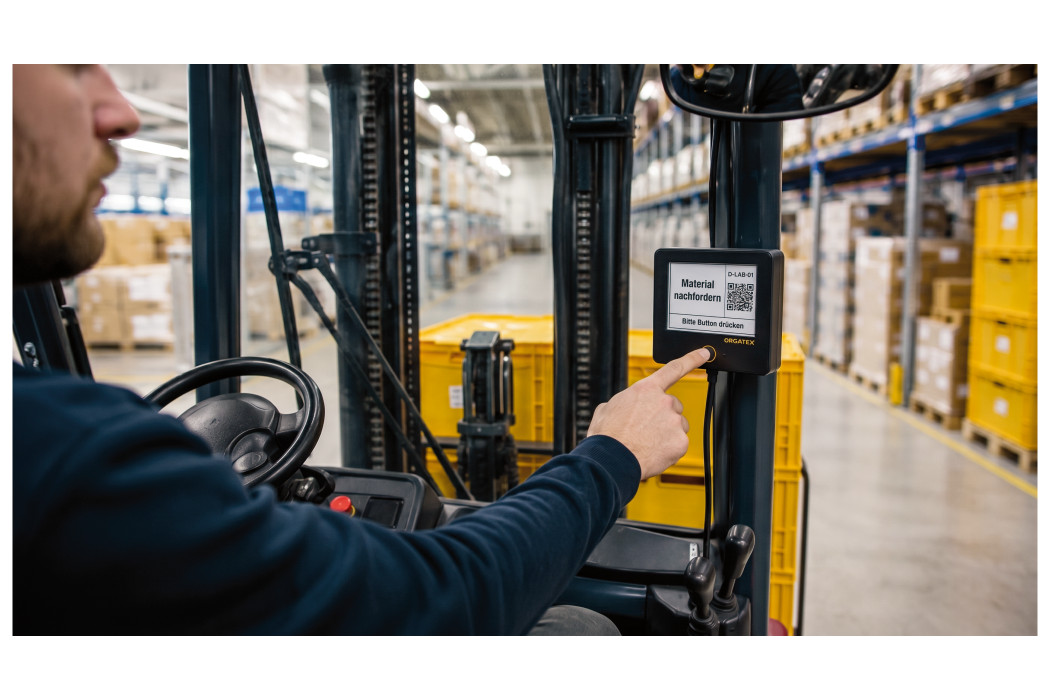
Another example is the recording of material requirements, which today are still partly reported by phone. An employee checks it, calls, someone writes it down, another person reacts. The process can work but ties up staff and causes structural delays. The same system can be equipped with a sensor that automatically reports the fill level to the leading customer system. It is similar to the "Smart Home" approach: When Alexa lowers the blinds, everyone understands. This understanding can be translated to the shop floor. All without a major IT project.
Integrated, but not all-encompassing
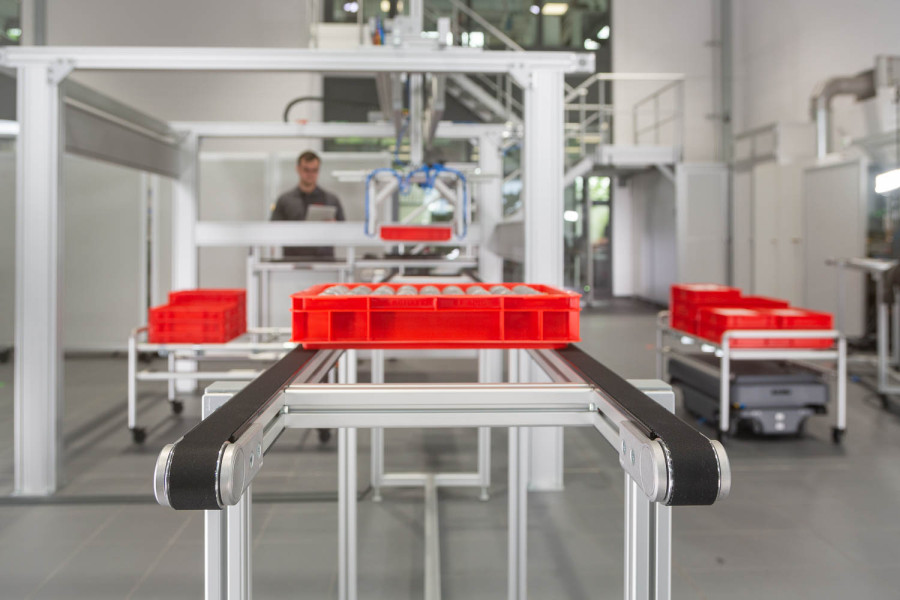
The integrative design of processes does not mean that a single system takes over all tasks. Quite the opposite: the approach works precisely because each system takes on the tasks for which it is designed. Sensors report states, the leading WMS or ERP processes them, and an AGV control system responds to them. Each system remains in its role, and communication runs exclusively through defined interfaces.
Nonetheless, certain operational environments impose specific requirements on technical implementation. In environments with strict IT security and compliance requirements, such as the defense or aerospace industry, a cloud connection via mobile networks is often not permitted. Here, an on-premise architecture is used, where the customer retains full system control and updates are applied through secure, offline-capable channels. On the other hand, in very small operations with low throughput, purely visual management often meets the entire demand. The use of IoT sensors only becomes economically viable when process volumes truly burden manual monitoring.
The ongoing skilled labor shortage is driving the partial automation as a gradual retrofit of existing facilities in current halls. Those who do not address how material flow components can function without additional personnel today will lose market competitiveness in the coming years. The growing coexistence of humans and autonomous systems simultaneously increases the need for dynamic safety labeling: areas that are fixed today must be adjusted according to the situation in the future. Additionally, increasing traceability and sustainability requirements arise. The seamless documentation of material flows requires a continuous data basis, which only emerges if shop floor signals and leading systems are truly connected.
Networking as an Operating Model
In ongoing operations, it becomes apparent whether an integration concept is practical. In any system landscape with multiple manufacturers and interfaces, recurring requirements arise: interfaces must be maintained, security patches coordinated, and responsibilities for system changes clearly defined. A robust concept takes this into account from the start and prevents these issues from remaining unresolved in daily warehouse operations.
This results in a clear requirement for the integration service provider: the user must be able to access documentation, interface access, and IT documents at any time without relying on the service provider.
Integrative intralogistics begins with the question of what role each system plays in the process and how transitions between them are designed so that the process runs smoothly without requiring manual interventions. The result is a system landscape that provides the operator with long-term planning security: expandable, adaptable, and independent of individual manufacturer decisions.
Author: Philipp Smolke, Head of Sales at Orgatex
Translated automatically from German.

Branchenverzeichnis