Suche
Newsletter abonnieren
News
Branchenverzeichnis


Sonderhefte/Specials

Shuttle-Profis


Fotostrecken

Toyota, Nvidia, and Soft Serve: How Digital Twins are Expected to Change Autonomous Forklifts

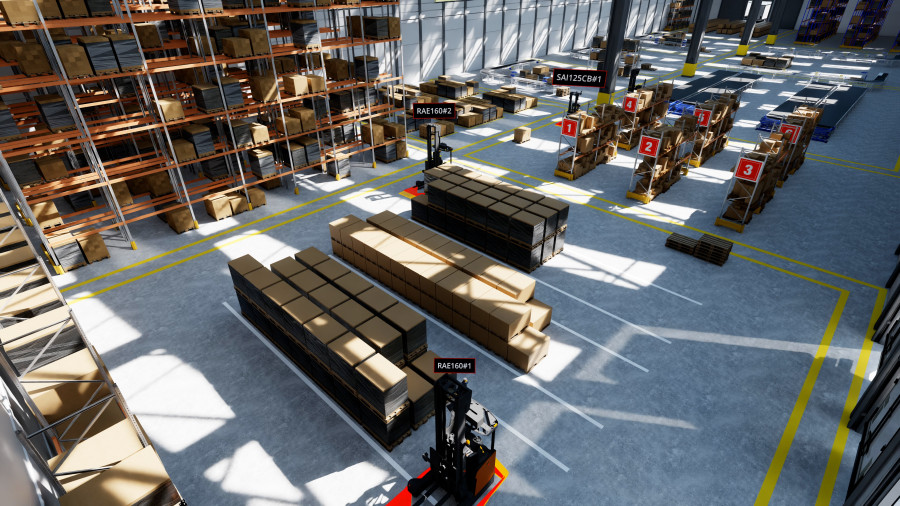
Toyota Material Handling Europe, in collaboration with Nvidia and Soft Serve, has created a simulation environment for the development of autonomous industrial trucks. Using digital twins, navigation, safety logic, and vehicle behavior can be tested under realistic conditions before being deployed to the customer. According to the company, this approach could reduce the commissioning effort by up to 50 percent and shorten the time to market by up to 40 percent.
Simulation before deployment to the customer
The development environment is based on the software libraries "NVIDIA Omniverse" and the robotics simulation framework "NVIDIA Isaac Sim". The technology enables the digital mapping of warehouse and production layouts and the simulation of the behavior of autonomous industrial trucks in different operating situations. This allows for the testing of navigation, safety logic, and the interaction of the vehicles with their environment. Customer-specific special cases can also be taken into account in the simulation. The goal is to identify and fix potential problems during development before the vehicles are implemented at the actual deployment site.
According to Toyota Material Handling Europe, the simulation tools have been integrated into their development processes. The virtual validation is intended to help reduce the effort for subsequent on-site adjustments and ensure the quality of automation solutions even before they go live.
Soft Serve Develops Digital Twin Environment
For the technical implementation, Toyota Material Handling Europe is partnering with software developer Soft Serve. The company developed the digital twin environment and integrated NVIDIA's technologies into a simulation solution for the development processes of the industrial truck manufacturer.
Soft Serve has been an Nvidia Elite Partner since 2022 and an Nvidia Advanced Technology Partner since 2026. The collaboration combines Nvidia's simulation platform with Soft Serve's development expertise and Toyota Material Handling's requirements for autonomous material flow solutions.
The development approach is guided by the Toyota principle "Zero Muda," which focuses on avoiding unnecessary use of time and resources. By moving tests and validation steps to the virtual environment upfront, extensive adjustments during later installation are expected to be reduced.
Digital Testing of Mixed Traffic Areas
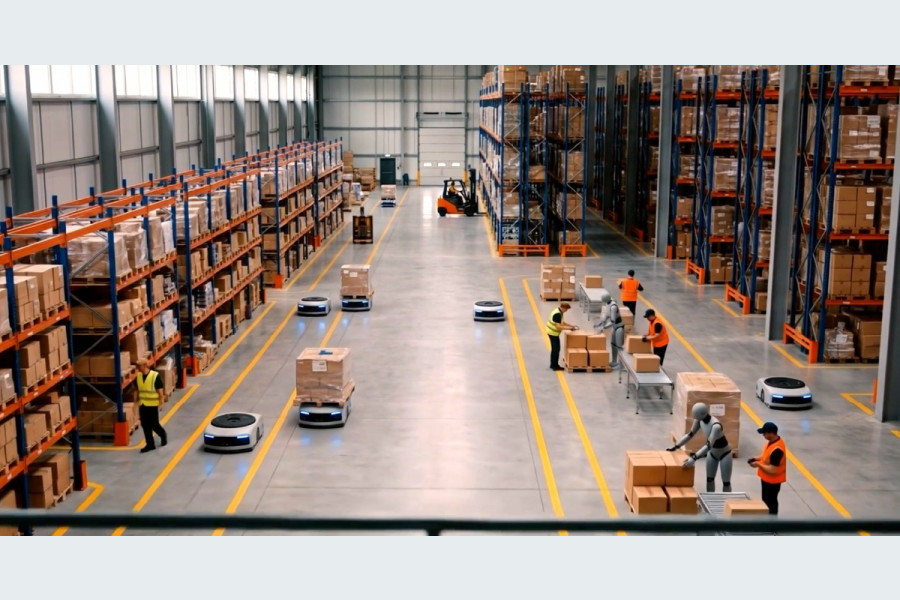
Another area of application for simulation is warehouse and production environments with different traffic participants. These include areas where autonomous industrial trucks travel alongside people and manually operated vehicles.
According to the company, such operational situations can be examined during the development phase with the help of digital twins. In addition to the driving movements, the navigation and safety logic of the autonomous vehicles can also be tested.
The simulation is intended to account for different deployment conditions and customer-specific requirements in advance. Toyota Material Handling aims to reduce the effort involved in adapting autonomous solutions to respective operational processes.
Pallet Recognition with Synthetic Training Data
A specific application case is camera-based pallet recognition. To train a corresponding recognition module, Toyota Material Handling generated synthetic data using the Omniverse libraries. Additionally, the open World Foundation Models from "NVIDIA Cosmos" were utilized.
According to the company, this resulted in more than a 70 percent improvement in recall for object recognition on evaluated real datasets from warehouse environments. This metric describes the proportion of actually present relevant objects that a recognition system correctly identifies.
The mentioned improvement refers to the recognition performance of the module under investigation. The press release does not provide information on the size and composition of the datasets used or the absolute recognition rate.
Shorter Development and Commissioning Times Targeted
With simulation-based development, Toyota Material Handling Europe aims to bring autonomous material flow solutions to operational readiness faster. The time-to-market is expected to be reduced by up to 40 percent. At the same time, the company is aiming to reduce commissioning efforts by up to 50 percent.
Early virtual validation is also intended to reduce possible disruptions during installation at the customer’s location. Other goals include higher development productivity, greater production flexibility, improved product quality, and lower operating costs in the scalable deployment of autonomous material flow solutions.
Artificial Intelligence for Further Production Processes
In addition to the development of autonomous material handling vehicles, Toyota Material Handling plans to use artificial intelligence in other production areas. Planned applications include AI-supported image processing and intelligent software agents for quality inspection, predictive maintenance, process optimization, and energy management.
These applications are intended to contribute to digitally supporting production and material flow processes and improving resource utilization. The company currently does not specify concrete introduction dates for these additional application areas.
Translated automatically from German.
Branchenverzeichnis