Suche
Newsletter abonnieren
News
Branchenverzeichnis


Sonderhefte/Specials
Shuttle-Profis


Mobile robots: Global sales in intralogistics increase by 19 percent


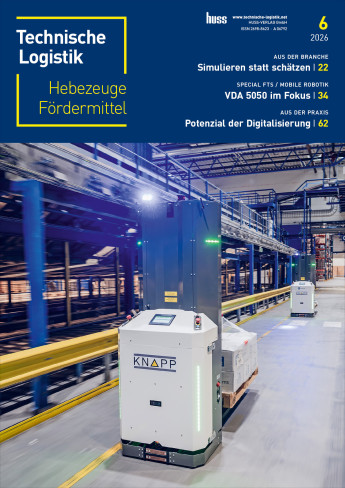
Transport and logistics applications represent the largest market segment within professional service robotics, according to the results of the annual report. Out of the approximately 117,500 robots sold worldwide in this sector, about 103,700 units were mobile systems for intralogistics.
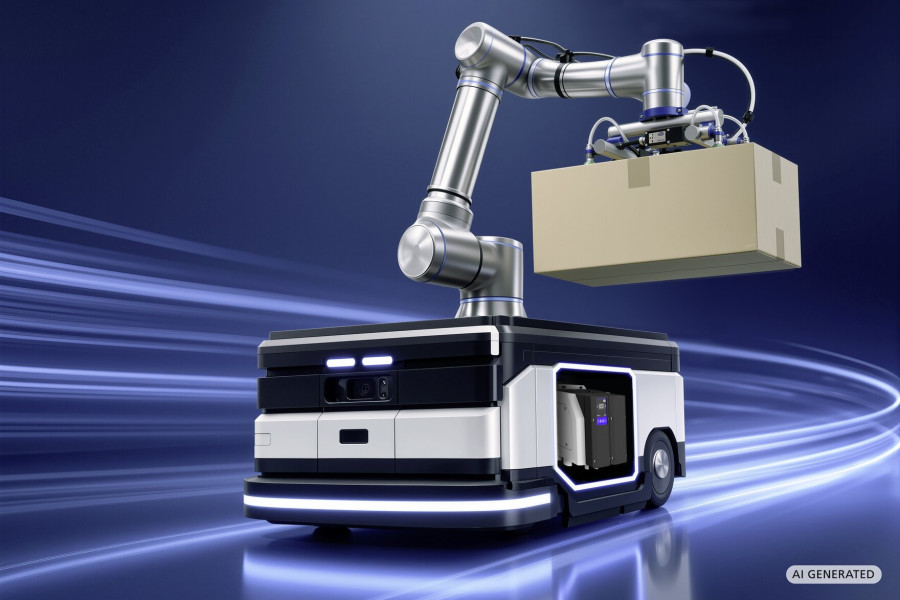
The robots take on various tasks in internal material and goods flow. This includes transportation inside and outside buildings, supplying production processes, and moving goods in storage areas. Other areas of use include loading and unloading trucks and pallets.
With sales growth of 19 percent compared to 2024, mobile intralogistics robotics also saw increasing demand in 2025. However, the published figures only refer to the companies covered in the annual report and do not reflect the full global market.


More than 90 percent of robots originate from Asia-Pacific
When it comes to the regional origin of mobile intralogistics robots, there is a strong concentration on Asian providers. According to the International Federation of Robotics, more than 90 percent of the recorded systems come from the Asia-Pacific region. European manufacturers account for seven percent, while North and South America together reach a share of one percent.
The VDMA specialist association for materials handling and intralogistics sees the government promotion of Chinese manufacturers as a competitive factor. According to the association's assessment, Chinese support measures lead to unequal conditions at the expense of European providers.
At the same time, the association points out that for industrial applications, criteria other than the number of units sold are relevant. These include, in particular, the quality and safety of the systems as well as their reliability and the available services.
Robot-as-a-Service is gaining importance
In addition to the regional market distribution, the annual report documents changes in sales models for mobile robots. According to the International Federation of Robotics, direct sales remain the most important sales channel.
At the same time, the Robot-as-a-Service business model is experiencing increasing proliferation. From 2024 to 2025, this market segment grew by 42 percent. In this model, robot systems are provided as a service rather than being sold exclusively through traditional direct sales.
The statement contains no information on the absolute number of systems provided via Robot-as-a-Service or their share of total sales.
Market data based on 238 companies
The results of the annual report "World Robotics 2026 – Service Robots" are based on a sample of 238 companies. The International Federation of Robotics points out that the data collected has not been extrapolated to the entire industry. The published sales volumes and market shares thus describe the structure of the recorded sample.
In addition to the sales statistics, the annual report contains an analysis of the individual application classes of service robotics, developed in collaboration with the Fraunhofer Institute for Production Technology and Automation. The study is supplemented by market assessments, expert interviews, and an overview of service robot manufacturers known to the International Federation of Robotics.
Translated automatically from German.
Branchenverzeichnis