Suche
Newsletter abonnieren
News
Branchenverzeichnis


Sonderhefte/Specials

Shuttle-Profis


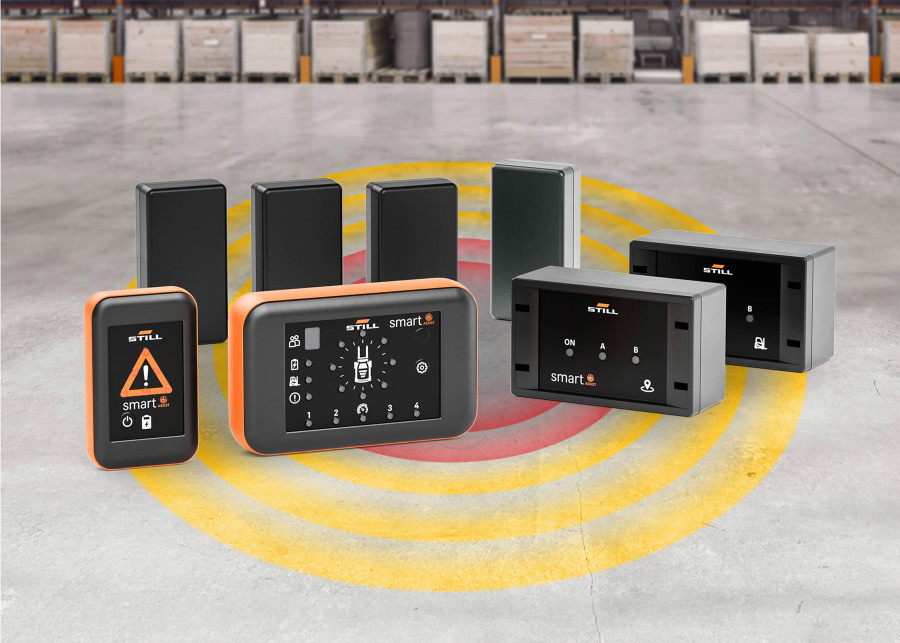
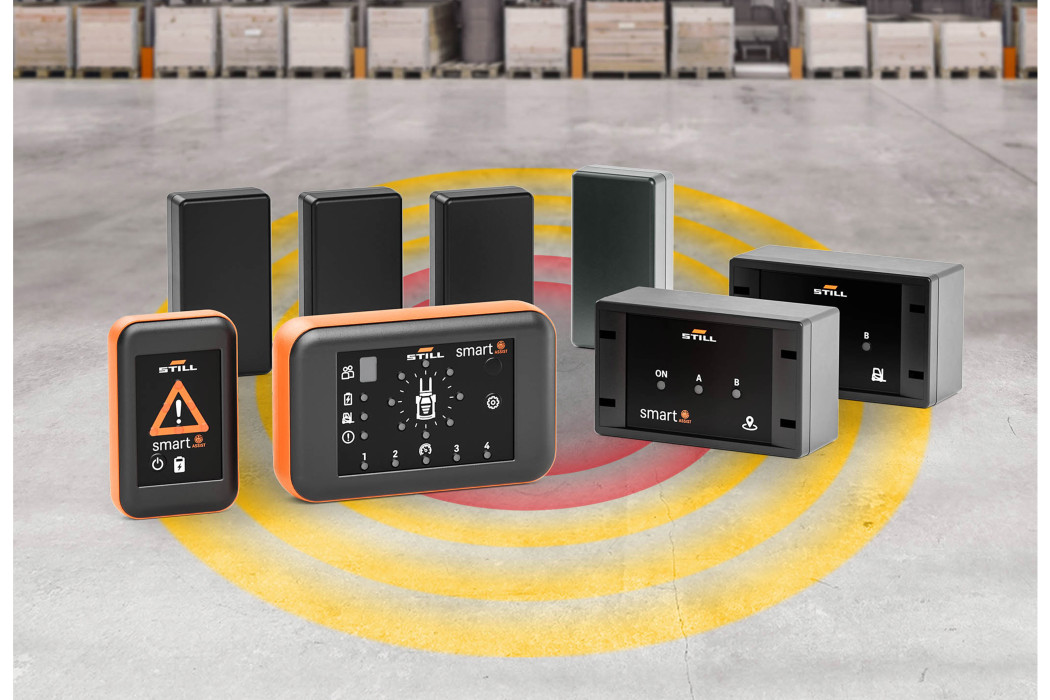
"Still Smart Assist": Modular assistance system to prevent collisions in the warehouse




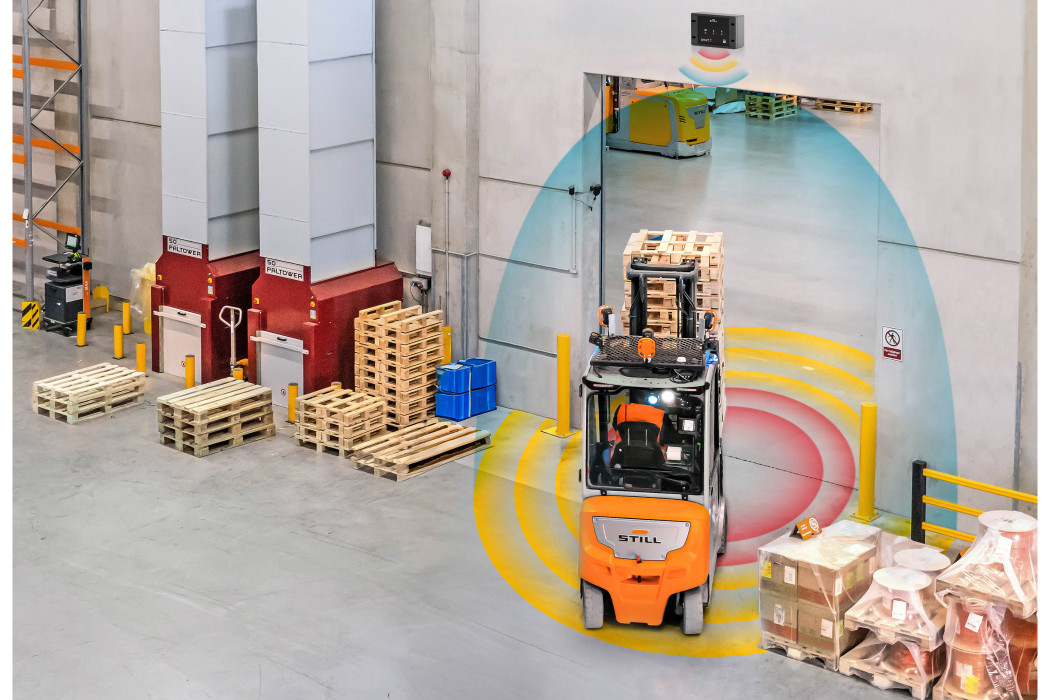



"Gate Control" monitors gate passages
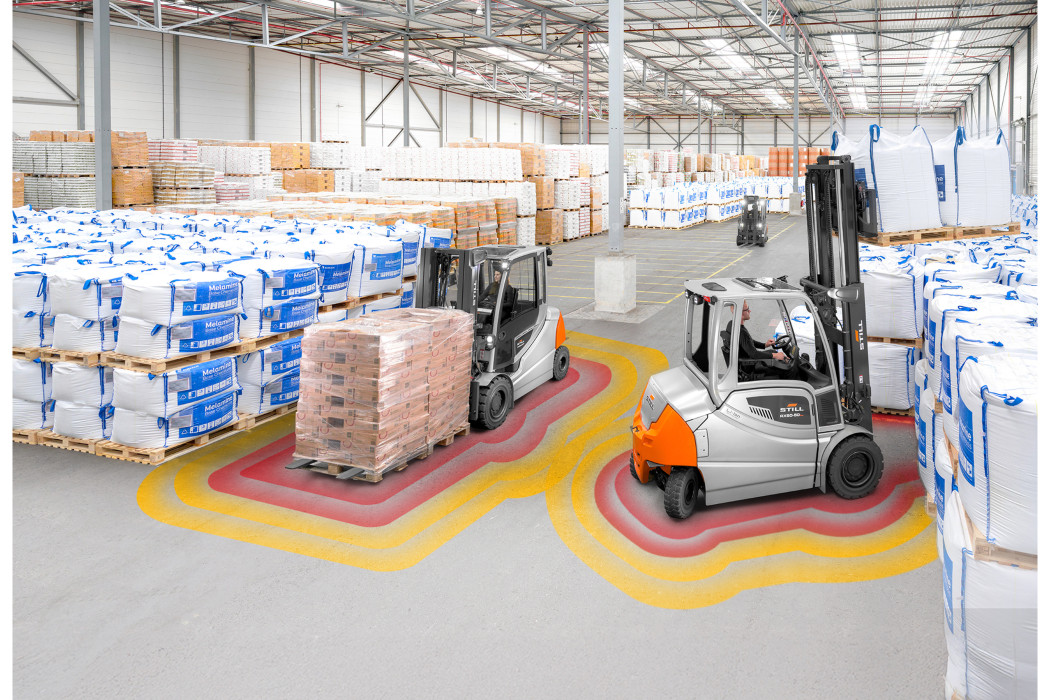
With the "Gate Control" module, Still also addresses collision risks at gates and hall passages. To this end, the system establishes protection and warning zones on both sides of a gate. As soon as an appropriately equipped vehicle enters the monitored area, the module automatically adjusts its speed and simultaneously triggers the gate opening.
Another function concerns the position of the lift mast. If it is raised when approaching the gate, "Gate Control" activates optical and acoustic warning signals and further reduces the vehicle speed. The speed reduction remains until the lift mast is lowered and a safe passage is possible.
According to the company, the module is intended not only to avoid collisions with people and other vehicles, but also to prevent damage to industrial trucks and the structural infrastructure.
"Zone Control" secures intersections and pedestrian crossings
For particularly high-risk traffic areas, the manufacturer offers the "Zone Control" module. Intended deployment locations include intersections, hard-to-see shelving entrances, gates, and pedestrian crossings.
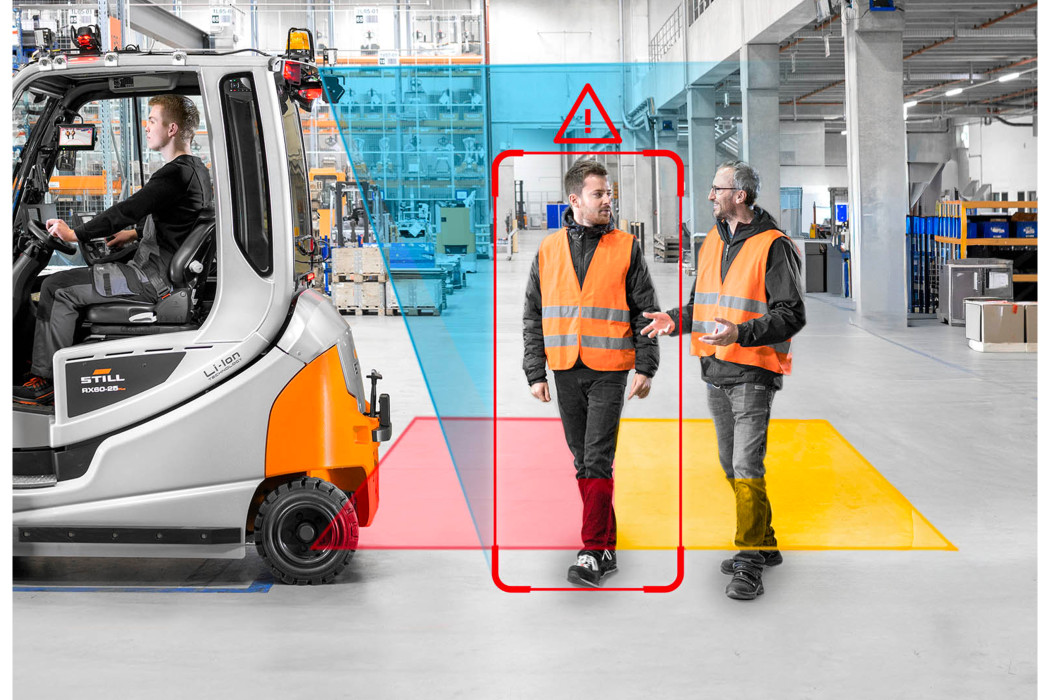
Mobile and stationary sensors detect potential hazards within previously defined protection zones. Depending on the configuration, the system responds with warning signals or an automatic reduction of vehicle speed.
As soon as the detected danger no longer exists, Zone Control automatically lifts the speed restriction. This is intended to limit speed only during the respective danger situation.
"Speed Control" limits the vehicle speed
While "Gate Control" and "Zone Control" monitor specific danger zones, the "Speed Control" module takes charge of controlling the maximum driving speed regardless of individual protection zones.
According to the manufacturer, the function can be used both inside warehouse and production halls as well as on traffic areas outdoors. The module controls the maximum speed of the vehicles there.
Camera-based detection without pedestrian modules
In addition to the radio-based components, "Smart Assist" can be combined with a mobile camera for object and person detection. The camera uses artificial intelligence and is supposed to detect people in hazardous areas without them having to carry separate pedestrian modules.
If an object is within a defined protection or warning zone, the system triggers a warning signal. At the same time, it informs about the direction from which the detected danger is coming.
For monitoring both driving directions, the camera-based solution, according to Still, can be expanded to up to three cameras. This should increase the detection range according to operational requirements.
Modular safety concept for different warehouse structures
With "Smart Assist," Still expands its offerings for collision avoidance and the improvement of operational work safety. Companies can select and combine the individual modules according to their traffic routes, danger points, and fleet structures.
Translated automatically from German.
Branchenverzeichnis