Melkus Mechatronic recovers braking energy in driverless transport vehicles.

Melkus Mechatronic relies on recuperation in its driverless transport vehicles to recover kinetic energy during braking and lowering of loads. As the manufacturer from Göming near Salzburg reports, the electric drive and lifting motors act as generators in the process. The generated electrical energy is fed back into the vehicle battery and is available for further transport tasks. This is intended to increase the energy efficiency and operational duration of the vehicles.

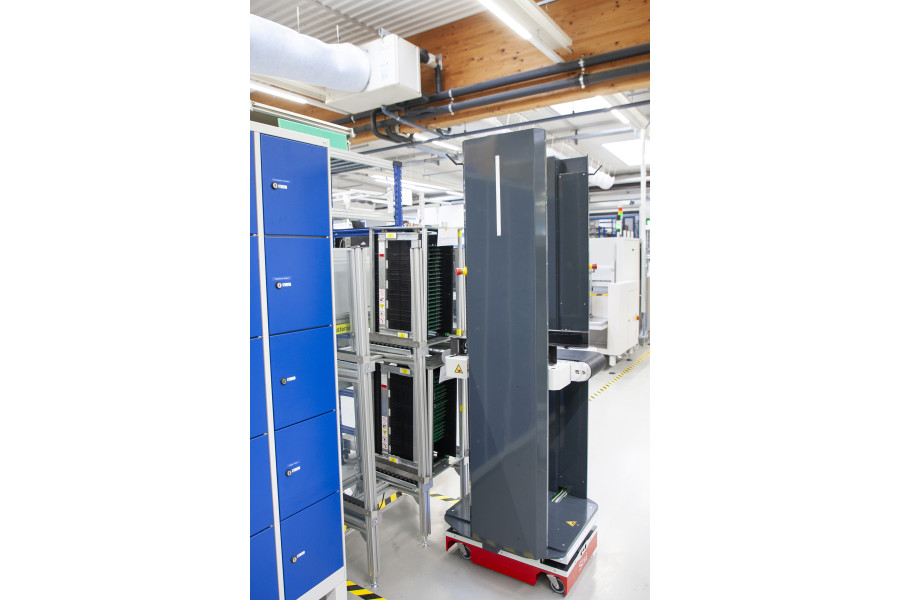
Using state-of-the-art drive control technology, autonomous transport robots from Melkus Mechatronic convert the kinetic energy generated during braking processes or when lowering the load into electricity and thus recharge the battery. (Image source: Sigmatek)
Driverless transport vehicles regularly accelerate and decelerate in daily operations, for example at intersections, before transfer stations, or when entering storage aisles. In conventional braking systems, the kinetic energy is predominantly converted into heat during deceleration and is therefore no longer available for propulsion. In contrast, electric drive systems allow for the recovery of this energy. The basis for this is the functioning of the electric motor, which can convert both electrical energy into motion and mechanical motion into electrical energy. In regular driving operations, the battery supplies electricity to the electric motor that drives the vehicle. During deceleration, this process can be reversed: the inertia of the rolling vehicle drives the motor, which then operates as a generator. The electrical energy generated in this process can subsequently flow back into the battery.

Energy Recovery Even When Lowering Loads

According to Melkus Mechatronic, recuperation is not limited to the drive systems. The electric motors of load handling devices are also used for energy recovery. This applies, for example, to high-lift forks, whose motors counteract gravity when lowering a load.

During this process, the lifting motors can also operate as generators and produce electrical energy. This energy, like the energy recovered during braking, can be fed into the vehicle battery.

Thus, the manufacturer utilizes both the kinetic energy of the moving transport vehicle and the energy available when lowering loads for further transport operations.

Regeneration Integrated into Battery Management

According to Melkus Mechatronic, regeneration is an integral part of the drive concept and battery management. The recovery occurs automatically during regular vehicle operation. Instead of converting the energy available during braking or lowering loads into heat via electrical resistors, it is stored for further use. This is intended to increase the range of the autonomous transport vehicles and extend their operational time.

Translated automatically from German.

Printer Friendly, PDF & Email

Branchenverzeichnis

09.10.2026
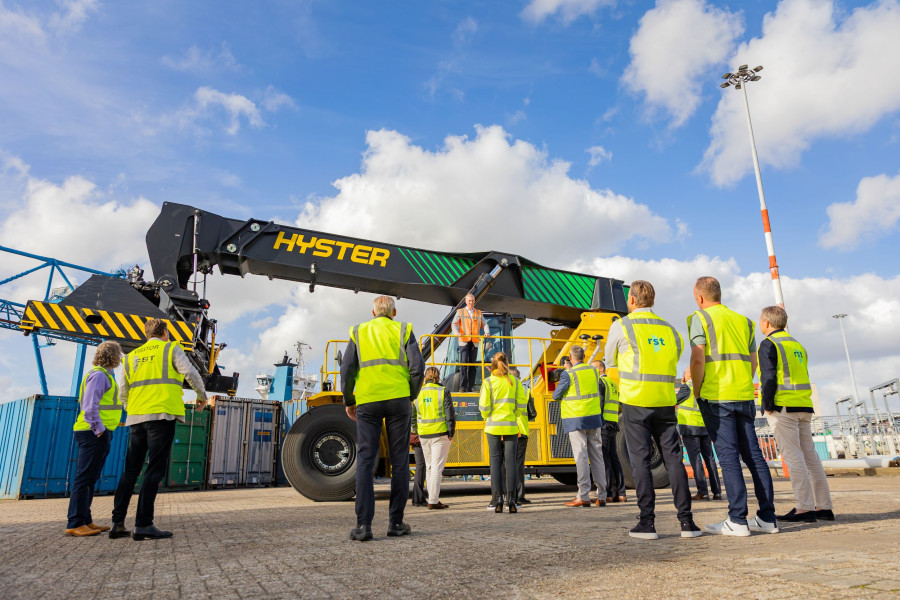
Hyster has delivered a reachstacker powered by a hydrogen fuel cell to Rotterdam Shortsea Terminals in the Netherlands. The terminal operator is using the vehicle in container handling and is expected...
21.08.2026
From the compact entry-level device to the model for longer transport distances, the new program offers a range. There are differences, among other things, in load capacity, lift height, initial lift...
21.08.2026
Shuttles, driverless transport vehicles, and conveyor technology continuously generate data and must be coordinated. Still shows the role Warehouse Control Systems play and why integrated solutions...
08.10.2026
Paul Vahle GmbH & Co. KG from Kamen has introduced a new generation of its optical positioning system for automated intralogistics and conveyor technology applications with "Apos Optic 2.0". Thanks to...
03.09.2026
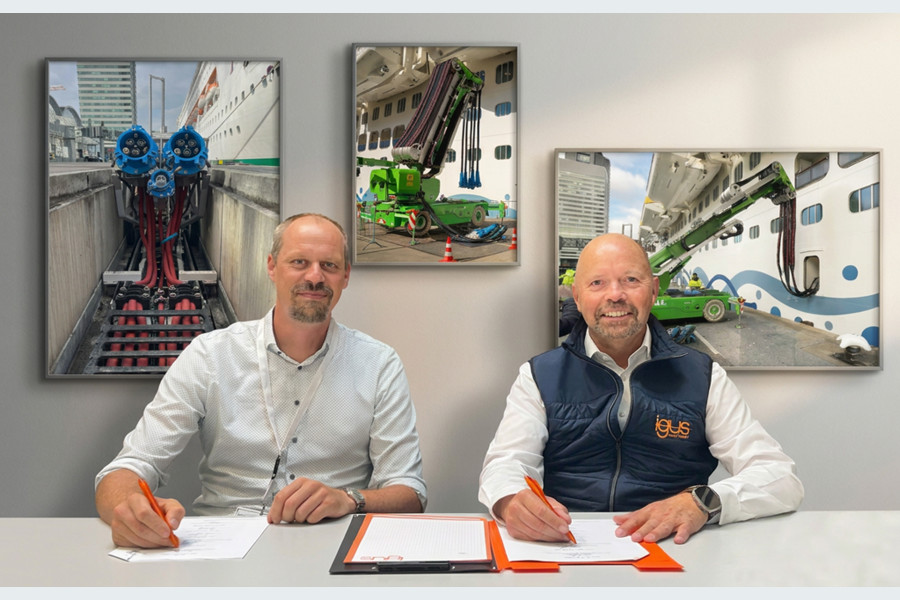
Whether shore power supply for ships or charging infrastructure for heavy vehicles and machinery: Robust systems are in demand that reliably transmit high power and are simultaneously flexible in use...
21.09.2026
Mediapoint & Exhibitions has announced the launch of the AGV Expo in Italy for October 2026. The event focuses on Automated Guided Vehicles, autonomous mobile robots, and other technologies for...