Suche
Newsletter abonnieren
News
Branchenverzeichnis


Sonderhefte/Specials
Shuttle-Profis


Hyster delivers hydrogen reach stacker to Rotterdam terminal

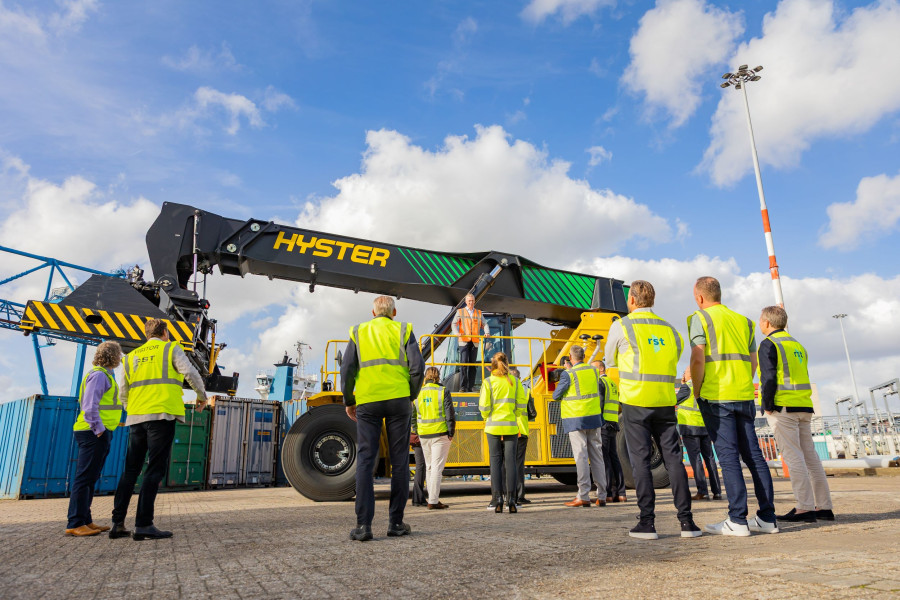
In the "Hyster RSJ46-33XDH/62" used, a 60-kilowatt fuel cell engine from Nuvera takes over the energy supply. The system converts hydrogen into electrical energy, supplying a lithium-ion battery with a capacity of 130 kilowatt-hours.
The reach stacker is mainly used in the terminal for handling 45-foot containers. This also includes open-top containers. For this task, Hyster has equipped the machine with a special 45-foot spreader.
According to the manufacturer, the vehicle also uses the standardized software architecture that is used in other electrically powered products of the company. This is intended to allow operation, diagnosis, and maintenance on a common technical basis.
Field Lab Investigates Hydrogen Supply
Hyster and the local dealer Heffiq have supplied the reachstacker as part of a five-year innovation project. The initiative is supported by the province of South Holland and the Just Transition Fund. Rotterdam Shortsea Terminals, Berkman Energy Services, Hyster, STC Next, and HarbourHUB are collaborating within the program.
The project partners are developing a field lab to demonstrate two technical approaches under practical conditions. These include a modular hydrogen filling station and the hydrogen reachstacker developed in the Netherlands.
The field lab aims to provide insights into how hydrogen can be integrated into logistics and industrial processes independently from the power grid. The use of the reachstacker simultaneously enables Rotterdam Shortsea Terminals to gain experience with hydrogen-powered container handling equipment during ongoing port operations.
Heffiq Takes Over Service
The local dealer Heffiq supports the vehicle during the project with its existing service infrastructure for port and terminal applications. Experts from Hyster are to accompany the project together with the dealer and the terminal operator.
Besides technical testing, the project includes measures to qualify employees and young professionals. In a joint experience center, employees, students, and logistics experts are to be prepared for the energy transition and the safe and efficient handling of hydrogen.
The project, co-financed by the European Union, is also intended to provide insights into carbon dioxide reduction, future regulatory requirements, and standardization, according to the participants.
Translated automatically from German.
Branchenverzeichnis