Suche
Newsletter abonnieren
News
Branchenverzeichnis


Sonderhefte/Specials
Shuttle-Profis


M2X standardizes communication between mobile robots and infrastructure.
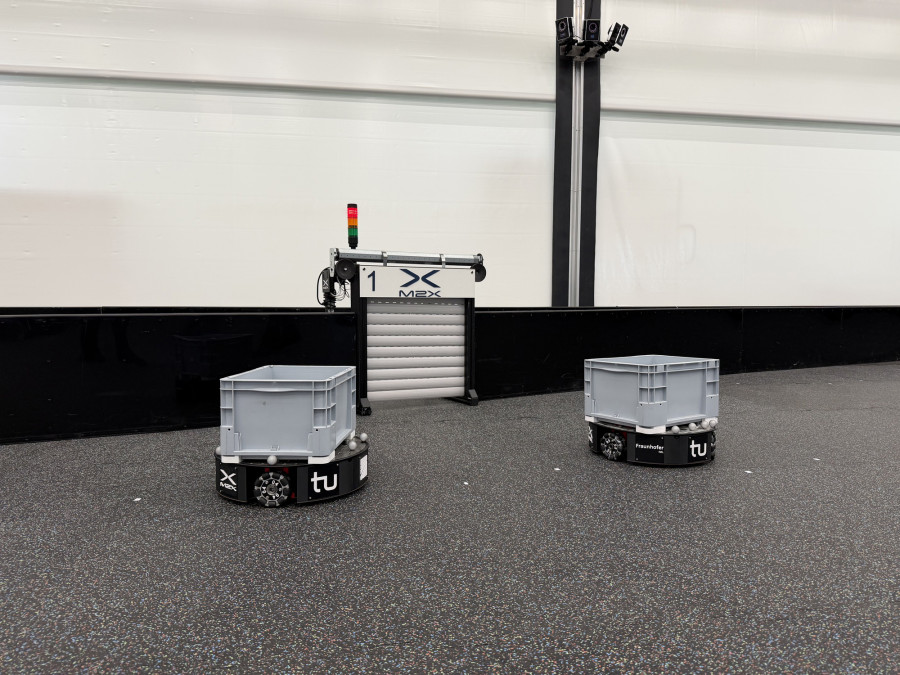
Mobile robots must interact with various technical systems in warehouse and production environments. These include doors, elevators, charging stations, signal systems, and load handling stations, among others. Transport orders must also be transmitted between the involved systems.
For this, vehicles, fleet management systems, and infrastructure components communicate with each other. According to the VDMA, these systems often come from different manufacturers in practice and use their own interfaces. This requires individual integration solutions that need to be developed, tested, and subsequently maintained.
M2X defines common communication principles
The open specification M2X addresses this interface and defines common communication rules for mobile robots and their technical environment. Vehicles and infrastructure components are intended to exchange information according to uniform principles.
The VDMA Professional Association for Material Handling and Intralogistics, along with industry partners, supports the initiative. According to the association, the development is carried out in coordination between research, industry, and users.
VDA 5050 is not a prerequisite
M2X builds on the concept of the open communication interface VDA 5050. However, its use is not required for M2X. While M2X establishes common communication rules between mobile robots and their environment, the specification focuses on the integration of infrastructure components such as load handling stations, doors, elevators, signaling systems, and charging stations.
Public draft can be tested
The draft specification is publicly available through a GitHub repository. Companies, manufacturers, and other interested parties can access M2X for their own applications and test it in projects. In addition, they can provide feedback and suggestions for improvement and participate in further development.
Translated automatically from German.
Branchenverzeichnis