Suche
Newsletter abonnieren
News
Branchenverzeichnis


Sonderhefte/Specials
Shuttle-Profis


Fotostrecken
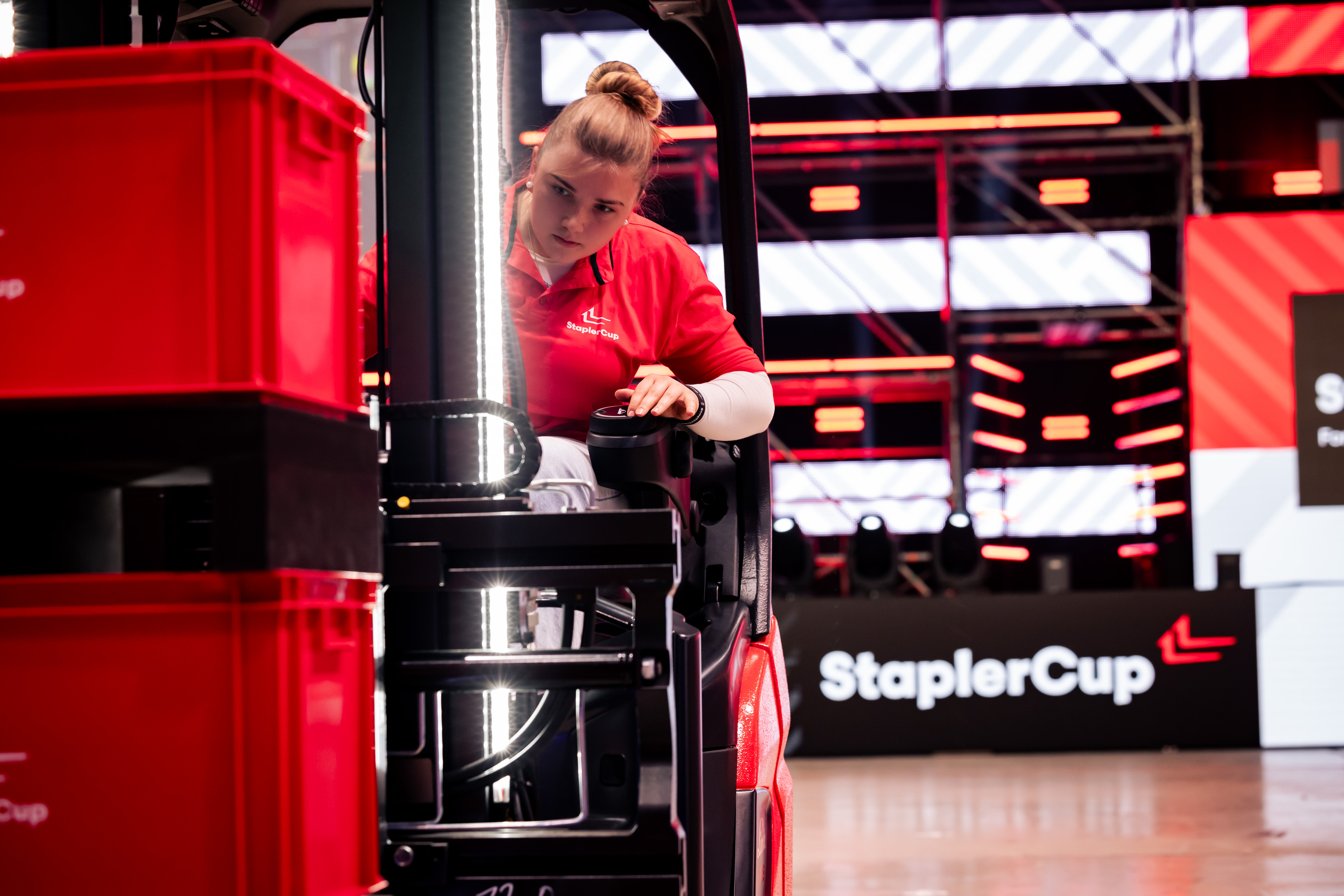
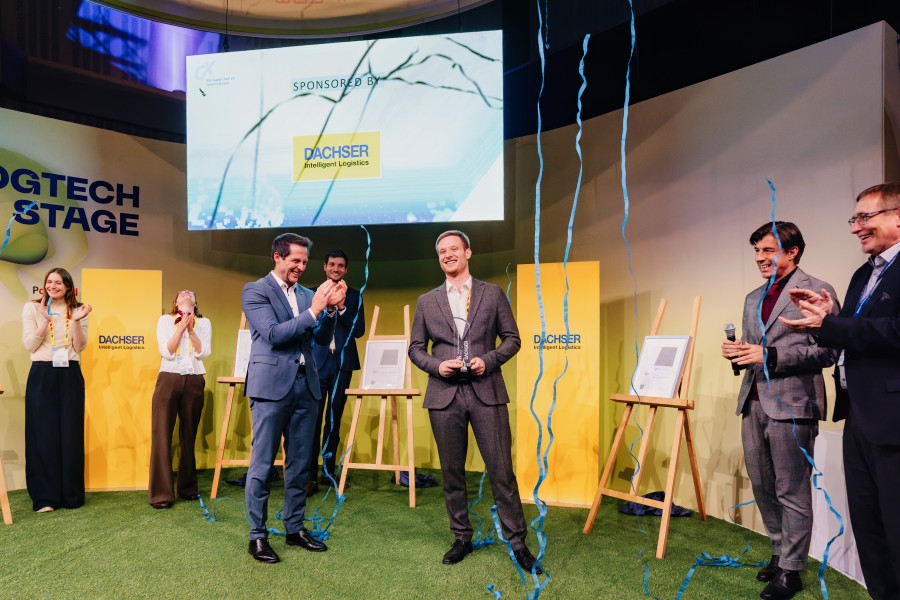
Logistics Science Award 2026 goes to Timo Lehmann for research on automated storage systems

The outstanding dissertation "Throughput Models and Performance Evaluation for Multi-Deep Automated Storage Systems" focuses on the question of how the performance of automated storage systems with multiple storage depths can be reliably evaluated already during the planning stage.
Such systems enable compact storage of goods and can thus contribute to better space utilization. According to the German Logistics Association, the evaluation of different facility configurations and operational strategies is complex. Until now, elaborate simulations have often been necessary to obtain reliable statements about a system's performance.
Therefore, Lehmann developed analytical methods that allow the throughput capacity of multi-deep automated warehouses to be estimated. With these, warehouse planners can compare different facility concepts and control strategies in early project phases without needing to create a separate simulation model for each variant studied. The models are intended to support the selection of suitable storage strategies and the dimensioning of required capacities. They can be used both in the planning of new facilities and in the evaluation of existing systems.
13 Operational Strategies Systematically Examined
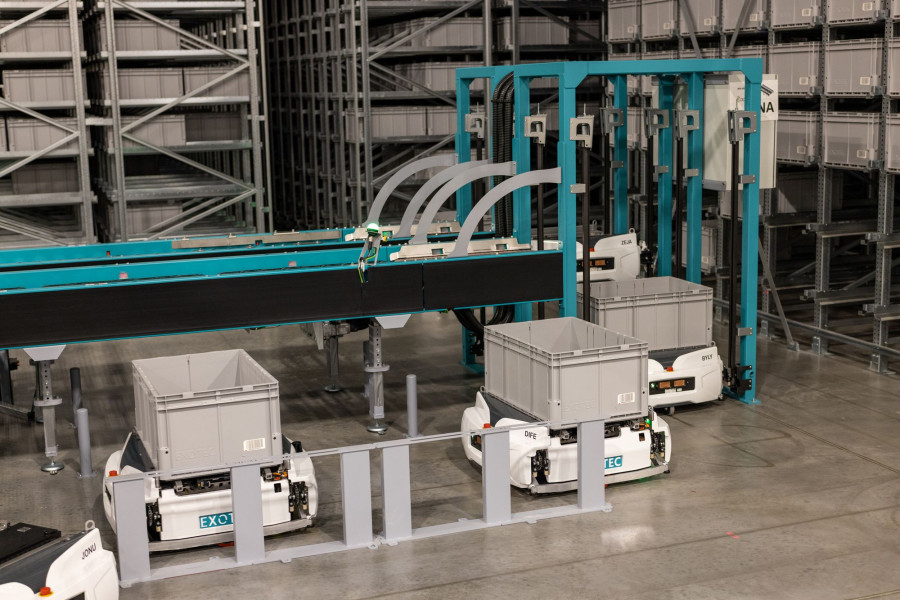
The research examines various types of automated storage systems with multiple storage depths. These include automated storage and retrieval systems as well as robot-assisted storage and retrieval systems. In total, Lehmann modeled, validated, and compared 13 different operational strategies. According to the German Logistics Association, the study also includes the strategy used by AutoStore.
For the mathematical description of the systems, the scientist used Markov chains and closed queuing networks. These methods allow the behavior of the storage systems in stationary operation to be depicted, and their performance under different conditions to be analytically examined. This work thus enables a systematic comparison of various control and storage concepts based on their respective throughput capacity.
Up to 48.5 Percent Higher Throughput
An essential result of the dissertation concerns the impact of the operating strategy on the performance of automated warehouses. The study shows that the selection of appropriate storage and retrieval rules can lead to significant differences in achievable throughput. According to the German Logistics Association, particularly effective was the combination of class-based storage with product-specific retrieval rules. This approach can increase throughput by up to 48.5 percent compared to the standard approaches examined.
The results show that, in addition to the technical system configuration, the chosen operating strategy also has a significant impact on the performance of multi-deep storage systems. The analytical models allow these differences to be examined before implementing a warehouse concept and to compare different strategies in terms of their throughput performance.
Validation with Data from the Automotive Industry
To verify the developed models, Lehmann used real industry data from a spare parts warehouse in the automotive sector. The validation was intended to ensure that the analytical methods could represent the behavior of corresponding storage systems under practical conditions. Thus, the dissertation connects mathematical modeling with an industrial application. According to the German Logistics Association, the developed methods can be used for the design and performance evaluation of future automated storage systems. For companies, this results in application possibilities particularly in selecting operational strategies, comparing different plant concepts, and estimating required storage capacities.
Scientific Award Endowed with 5,000 Euros
The dissertation was supervised by Kai Furmans at the Karlsruhe Institute of Technology and René de Koster at the Rotterdam School of Management. The decision to award the prize was made within the framework of the BVL Supply Chain CX in Berlin. After a public pitch by the finalists, the jury deliberated on the submitted works on October 21st. Lehmann was subsequently announced as the winner on the Logtech Stage.
The Logistics Science Award was presented for the 35th time in 2026. This year, the award, endowed with 5,000 euros, is again sponsored by Dachser.
Since 1992, the German Logistics Association has presented the award to young scientists for scientific achievements with practical relevance to logistics. The selection criteria include scientific demands, innovation content, logistics relevance, and the practical relevance of the submitted works.
Translated automatically from German.
Branchenverzeichnis