Suche
Newsletter abonnieren
News
Branchenverzeichnis


Sonderhefte/Specials
Shuttle-Profis


Schmalz launches electric vacuum pump for mobile robots onto the market

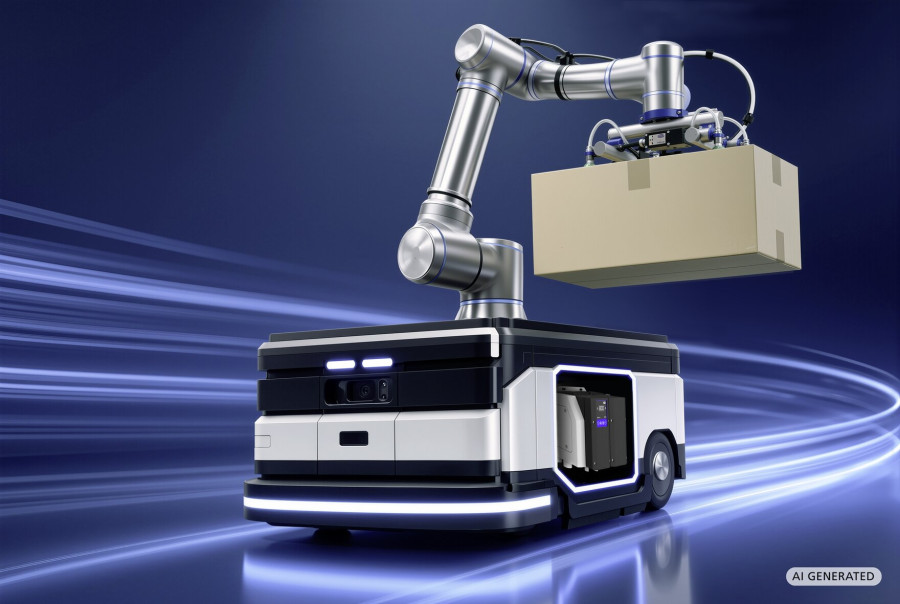
With the increasing adoption of Autonomous Mobile Robots and Automated Guided Vehicles for gripping and handling tasks, the demands on integrated vacuum technology are rising. In addition to sufficient suction capacity, a compact design, short response times, and low energy consumption are required. Particularly in battery-powered systems, the energy consumption of the handling technology influences the possible operating time.
So far, electric pumps and pneumatic ejectors are primarily used for vacuum generation. Pneumatic systems require compressed air, which must first be generated from electrical energy and then converted into a vacuum. Electric vacuum generators skip this intermediate step. However, traditional rotary vane or claw pumps are often large and heavy. Due to their mechanical properties, they are also less suitable for operations with frequent changes.
Schmalz already offers compact electric vacuum generators like the "ECBPMi" and "ECBPi" models, as well as the compact pump "GCPi." However, according to the company, their maximum performance of 50 liters per minute limits the application possibilities for high-volume flow requirements. The new GSP is intended to expand this range of applications.
Suction capacity of up to 150 liters per minute
The GSP achieves a suction capacity of between 50 and 150 liters per minute. Due to its fully electric design, it does not require connection to an existing compressed air network. This allows it to be integrated into automation solutions independently of a central compressed air supply.
According to the manufacturer, potential areas of application include mobile robotic systems as well as handling processes in the automotive, glass, and packaging industries. The decentralized vacuum generation is intended to facilitate the retrofitting of existing systems in particular, as no additional compressed air infrastructure is required.
To reduce operating noise, the pump is equipped with integrated soundproofing. In conjunction with the vacuum bias provided by the compact valve "LQE," noise generation is expected to be further reduced. As a result, additional soundproofing measures are not required in many applications.



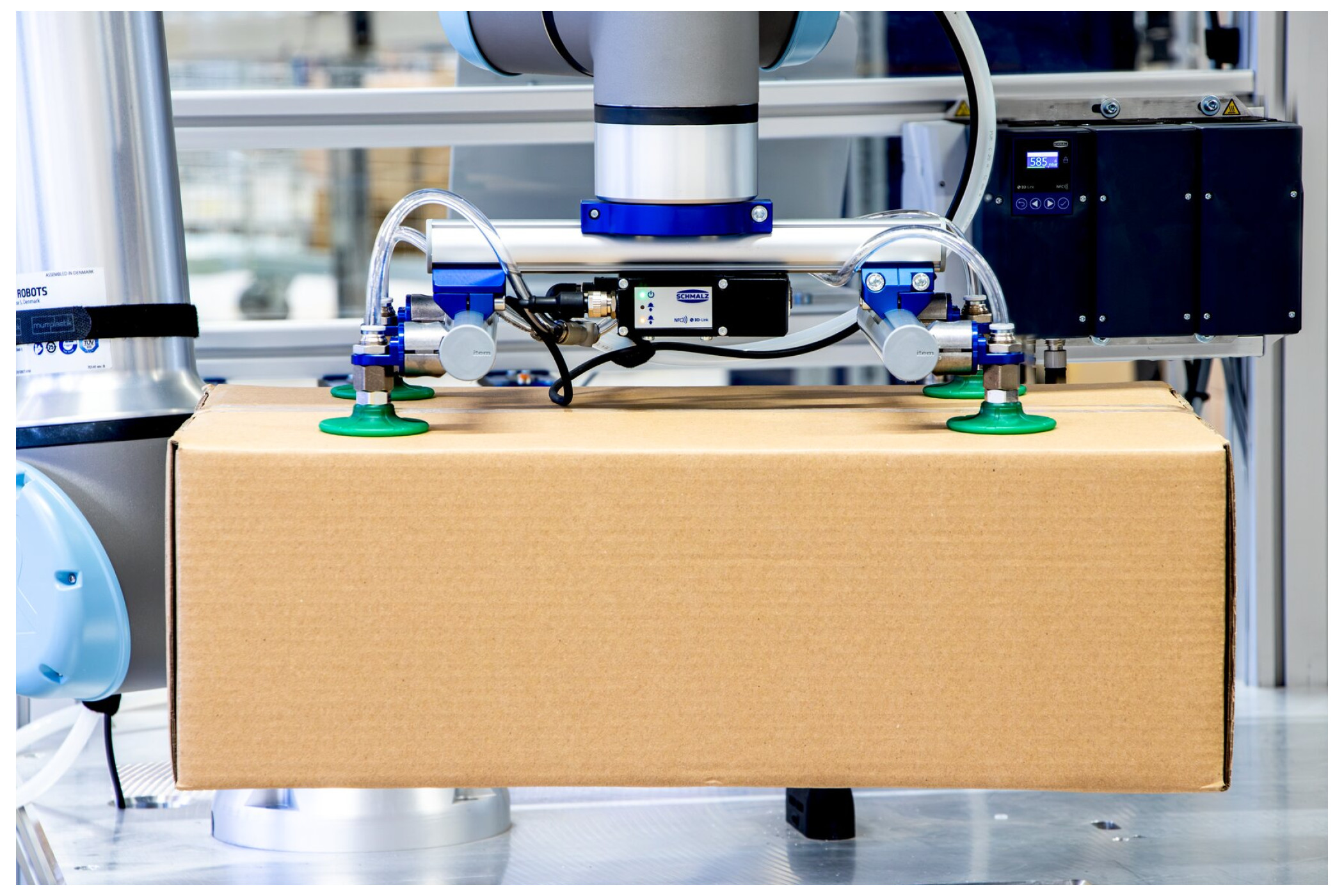

Automatic Control Reduces Energy Consumption
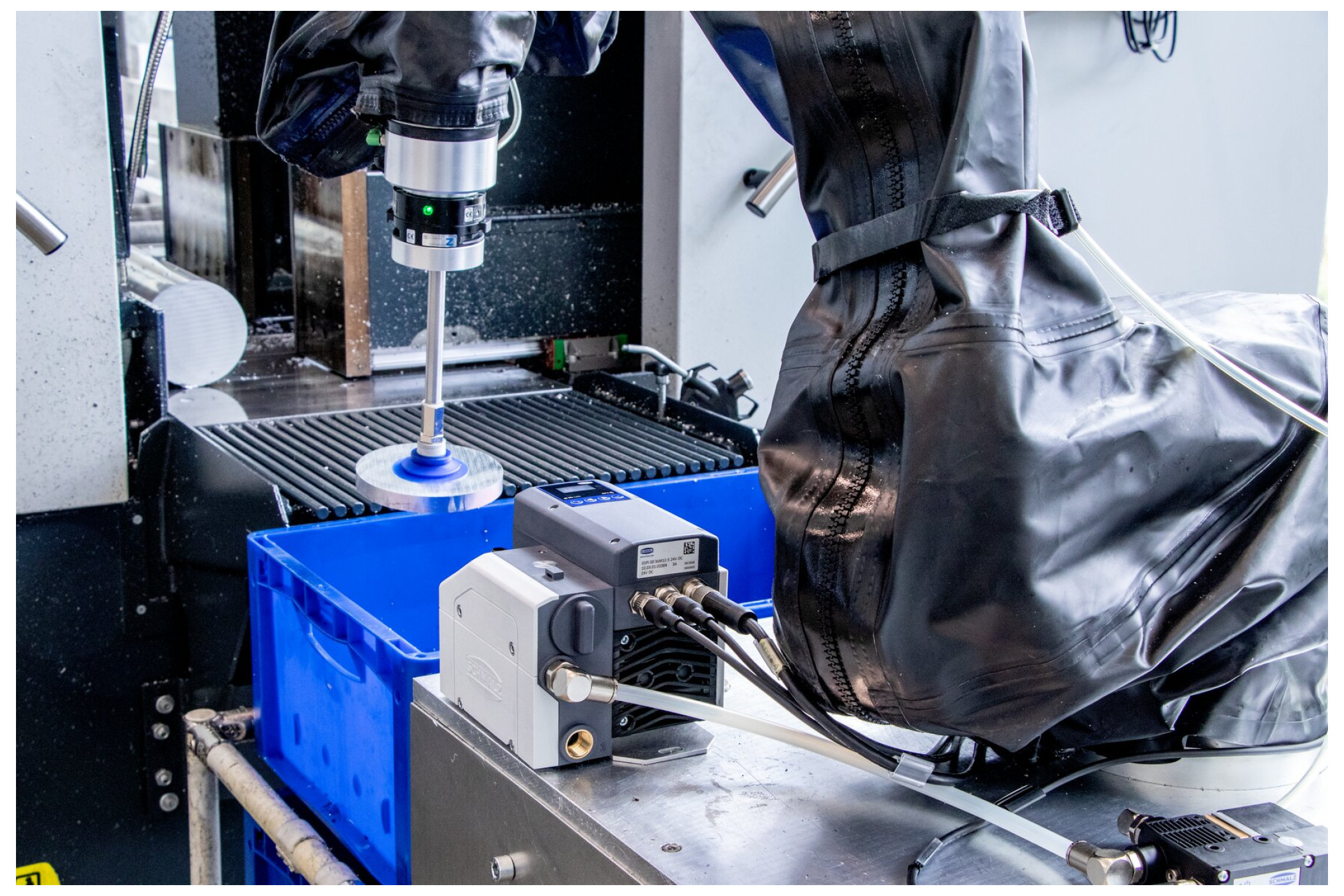
A key feature of the GSP is its demand-oriented speed control. The pump automatically adjusts its performance to the required vacuum level. For airtight workpieces, it can reduce its speed to zero and, according to the manufacturer, almost no longer requires any energy.
In applications with higher demands on the flow rate, power reserves are available. This applies, for example, to fast gripping cycles or the handling of workpieces where air flows into the vacuum system due to their material properties.
The pump automatically detects any leaks and adjusts its performance accordingly. Furthermore, it independently determines the porosity of the material being handled and regulates the flow rate. Possible materials mentioned by Schmalz include cardboard, plastic, and metal.
Thanks to these control functions, energy consumption is expected to decrease by up to 90 percent compared to conventional electric vacuum generators. For battery-powered mobile robots, the lower energy requirement could, according to the manufacturer, enable longer operating times or the use of smaller batteries.
Compact Valve Supports Faster Gripping Cycles
For dynamic handling processes, the GSP can be combined with the compact valve LQE. Both components communicate independently with each other and form a ready-to-connect solution that can be put into operation without manual software setup.
During the waiting time between two gripping operations, the system already builds up vacuum. This stored vacuum is immediately available for the subsequent gripping. The resulting inrush impulse accelerates the suction of the workpiece.
The combination of pump and valve is intended to enable higher cycle frequencies. Schmalz specifically mentions dynamic handling processes in intralogistics and order processing as application areas.
When placing the workpieces, the energy requirements should also decrease. The compact valve enables atmospheric ventilation, so no additional compressed air is required to release the workpiece. Compared to conventional blow-off methods with compressed air, the energy use for this process step should decrease by up to 99 percent.
Digital Interfaces for Diagnosis and Control
For commissioning and monitoring, the GSP is equipped with an NFC interface. Via this, device information and diagnostic functions can be accessed with a smartphone. Additionally, an integrated color display shows process and device data.
Connection to higher-level control systems is achieved via IO-Link. The pump automatically detects whether there is a connection to a corresponding master and independently switches to the appropriate operating mode. During ongoing operations, it transmits, among other things, vacuum values and diagnostic information to the programmable logic controller.
The provided data is intended to help identify possible faults early on. As an alternative to communication via IO-Link, the pump can be controlled via conventional digital inputs and outputs.
Optional Power Supply for Extended Hold Times
For applications with increased requirements for process safety, the GSP can optionally be equipped with an uninterruptible power supply. This is designed to ensure that vacuum-tight workpieces can still be held even in the event of a power supply failure.
According to Schmalz, under these conditions, hold times of up to 20 hours are possible. The function is particularly relevant for handling processes where workpieces should not be immediately released in the event of an interruption in the energy supply.
Translated automatically from German.
Branchenverzeichnis