Suche
Newsletter abonnieren
News
Branchenverzeichnis


Sonderhefte/Specials
Shuttle-Profis


100 humanoid robots for intralogistics: What Nucleus Robotics and Igus are planning

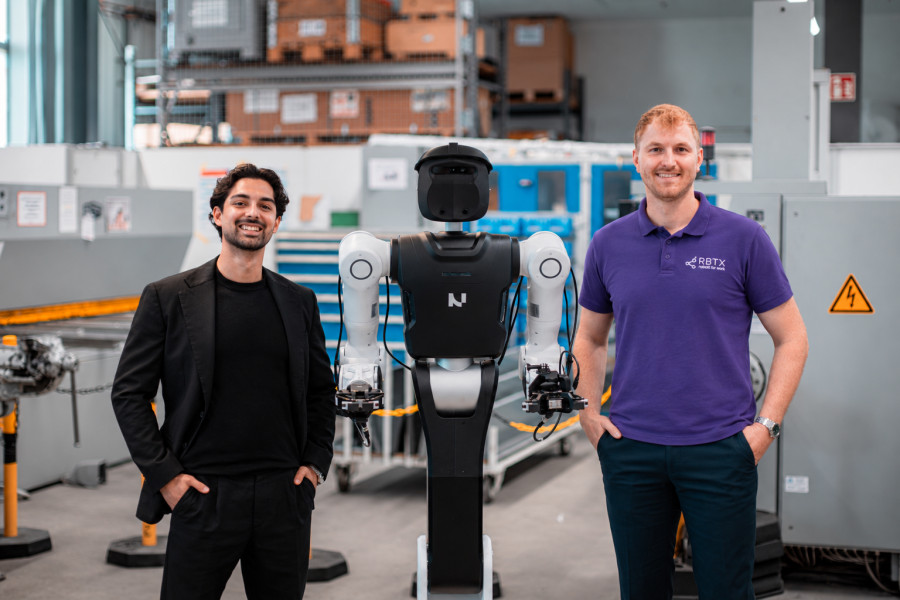
The Gütersloh-based system integrator Nucleus Robotics intends to build a fleet of up to 100 humanoid robots for intralogistics. For the procurement of the systems, the company, founded in 2026, relies on the robotics marketplace RBTX from the Cologne plastic specialist Igus. The robots are to take over recurring tasks in warehouse and logistics processes, including order picking for customer orders, internal goods transport, and the supply of packaging stations. The companies aim to advance the use of humanoid robotics beyond individual pilot projects through their collaboration.
Humanoid Robots for Order Picking and Goods Transport
Nucleus Robotics focuses on the integration of humanoid robotic systems in existing production and logistics environments. The company's goal is to make the technology, which has so far been used mainly in pilot applications, available for the operation of larger robot fleets.
The intended areas of application include, in particular, recurring tasks in warehouse logistics. Humanoid robots are expected to pick items from shelves, assemble customer orders, and prepare goods for shipment. Additionally, Nucleus Robotics envisions applications in the transport of goods and supplying packaging stations in e-commerce warehouses. Other potential tasks include restocking storage locations and replenishing retail store shelves.
The planned fleet is to be procured via the RBTX marketplace. According to igus, the platform enables cross-manufacturer comparisons of different humanoid robotic systems. This allows Nucleus Robotics to select suitable models for various applications.
Simulation and Software for Robot Integration
To integrate humanoid robots into existing operations, Nucleus Robotics relies on digital factory models and simulations. The company first creates three-dimensional models of the respective deployment environments and examines the intended processes using simulation technologies. Subsequently, the selected robot systems are to be put into operation on-site.
A key role is played by the company's proprietary software "Nucleus AI". It is used for model training and real-time monitoring of the deployed robots. This is intended to prepare the systems for their respective tasks and monitor them during operation. According to the companies involved, the combination of digital planning, simulation, and software-supported monitoring forms the basis for the integration of larger fleets of humanoid robots into existing production and logistics processes.
RBTX offers 95 models from 35 manufacturers
According to igus, the robotics marketplace RBTX currently includes 95 humanoid robot models from 35 manufacturers. The platform is particularly aimed at small and medium-sized businesses looking to select, test, and integrate robotic systems for their respective applications. In addition to offering a variety of robot models, RBTX provides support in selecting and integrating the systems. Interested parties can compare robots, test them under real conditions, and find integration partners for commissioning.
Igus also relies on different procurement models. Companies can purchase the robotic systems or rent them for an extended trial period. This approach is intended to support applications where the technical and operational requirements need to be verified before making a permanent investment.
From pilot project to fleet deployment
Nucleus Robotics and igus aim to gain experience in deploying humanoid robotics on a larger scale. While RBTX provides access to robotic systems from various manufacturers, integration services, and a partner network, Nucleus Robotics contributes its integration and software development focused on intralogistics processes.
The focus is on transitioning humanoid robotics from individual test applications to recurring tasks in industrial everyday life. The planned fleet of up to 100 systems is intended to lay the groundwork for this.
The press release does not specify whether and to what extent the proposed applications have already been tested under real operating conditions. Likewise, there is a lack of information on planned investments, the economic viability of the systems, and possible performance metrics in picking or transporting goods.
Translated automatically from German.
Branchenverzeichnis