Suche
Newsletter abonnieren
News
Branchenverzeichnis


Sonderhefte/Specials
Shuttle-Profis


More than 565,000 units in one day: How warehouses can respond to demand peaks with mobile robotics

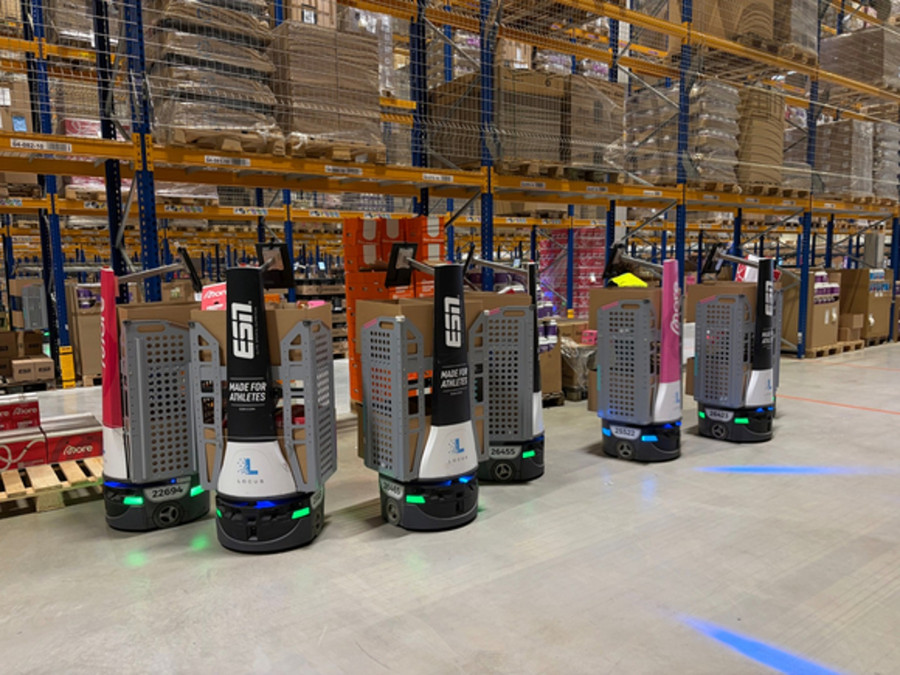
Locus Robotics Showcases Strategies for Flexible Warehouse Automation during Demand Peaks
Short-term demand peaks place additional demands on capacity planning for warehouse and fulfillment operators. Beyond seasonal events such as Black Friday and Christmas, social media, product campaigns, or changing market conditions can influence order volume within hours. Locus Robotics explains, through practical examples from The Quality Group and Boots UK, how different demand patterns affect material flow. According to the mobile robotics provider, the ability to quickly adapt orders, personnel, and robot capacities to changing conditions is becoming increasingly important.
In traditional demand peak planning, known seasonal events often take center stage. Companies prepare for this through additional personnel and technical capacities. Planning becomes more challenging when demand surges occur unexpectedly, last longer, or affect other items than originally anticipated.
Possible triggers include viral social media posts, influencer recommendations, new products, limited special editions, and discount promotions. New customs regulations can also trigger changes in demand. Such developments do not solely affect the number of orders. If demand for certain items changes, simultaneously storage space requirements, picking paths, replenishment processes, and the utilization of individual warehouse zones may shift.
The Quality Group with more than 565,000 picked units
How significantly short-term demand changes can impact intralogistics is illustrated by Locus Robotics using the example of The Quality Group. At this company, order volumes can multiply during campaign-related peaks compared to a regular business day. During such a phase in June 2026, according to available information, more than 100,000 orders and over 565,000 units were picked in one day.
A particular challenge with campaign-driven demand peaks is that not only does the total quantity of orders change. Demand for individual items can also increase significantly within a short time. Products that previously only had a limited share of the order volume can thereby develop into particularly frequently picked items.
This changes the requirements for warehouse organization. Additional orders may concentrate on certain warehouse zones while other areas continue to be regularly utilized. At the same time, resupply must keep pace with the increased outflow of goods.
According to Locus Robotics, it is therefore not enough to solely provide additional total capacity. It is crucial to specifically align personnel, workloads, and robotic resources with the actual emerging bottlenecks.
Limits of Fixed Installed Automation Systems
In designing automated warehouse technology, companies align themselves with expected order volumes, item structures, and process requirements among other factors. Fixed installed automation systems can achieve high throughput performance under stable operating conditions. However, highly fluctuating demand profiles present additional economic and technical requirements. If a system is designed for the maximum expected order volume, significant capacity reserves can remain unused outside of peak times.
On the other hand, dimensioning based on average order volumes can lead to insufficient available capacity during exceptional demand peaks. This can result in limitations in throughput and the fulfillment of agreed service levels. Moreover, fixed installed systems cannot always be quickly expanded or adjusted to changed process requirements. This is particularly relevant in situations where bottlenecks shift within the warehouse or demand increases occur earlier than expected.
For this reason, Locus Robotics places the flexible management of existing resources at the center of its approach. It aims not only to provide additional capacities but also to continuously coordinate the available technical and human resources.
“Locus One” Coordinates Orders and Mobile Robots
For these tasks, the provider relies on its software platform “Locus One”. It coordinates orders, employees, and robotic resources during ongoing warehouse operations. The control adjusts workloads and priorities according to specific requirements.
Additionally, according to the manufacturer, the solution “FastPick” enables dynamic adjustments of order priorities and robotic capacities. For example, if demand for a specific item suddenly increases, available resources can be specifically aligned with the affected processes. The goal is to handle changed order profiles without fundamentally redesigning the existing warehouse structure or processes. Besides technical management, Locus Robotics views the provision of additional robots as a means to manage fluctuating workloads. Through the business model Robots-as-a-Service, companies can adjust their automation capacity to changing requirements.
The inclusion of seasonal workers also plays a role. Visual operation guidance, multilingual user interfaces, and standardized work processes are intended to ease onboarding. This allows temporary employees to be integrated into existing picking processes at short notice.
Boots UK Responds to Extended Seasonal Peaks
While The Quality Group serves as an example of short-term, campaign-driven demand spikes, Locus Robotics describes a different strain pattern with Boots UK. The company regularly plans additional robot capacities for seasonal peaks around Black Friday and Christmas. In recent years, however, the increased demand lasted longer than originally predicted. As a result, some of the additional robots remained in use well into January. During peak phases, Boots UK processed more than 100,000 order lines per day according to Locus Robotics. The stated peak throughput was over 6,700 order lines per hour.
The example illustrates another challenge of capacity planning. While the sudden change in order volume and product structure is particularly relevant for short-term campaigns, in seasonal events, the actual duration of increased demand can deviate from the original plan. An adaptable capacity plan must therefore account not only for additional performance during known peak times but also for their possible extension.
Resource Management as Part of Peak Planning
The two examples illustrate different requirements for planning and controlling automated warehouse processes. The Quality Group focuses on short-term changes in the order profile. For Boots UK, it is about a seasonal demand increase whose duration did not fully match the forecast.
Locus Robotics derives from this the importance of ongoing coordination of orders, workloads, employees, and robot capacities. The provider refers to this coordinated resource management as orchestration. This expands the preparation for demand peaks to include how quickly existing and additionally provided capacities can adapt to changed requirements.
Translated automatically from German.
Branchenverzeichnis