Suche
Newsletter abonnieren
News
Branchenverzeichnis


Sonderhefte/Specials
Shuttle-Profis


Cross-Docking: When Companies Can Do Without Interim Storage
Plannable Goods Flows as Prerequisite
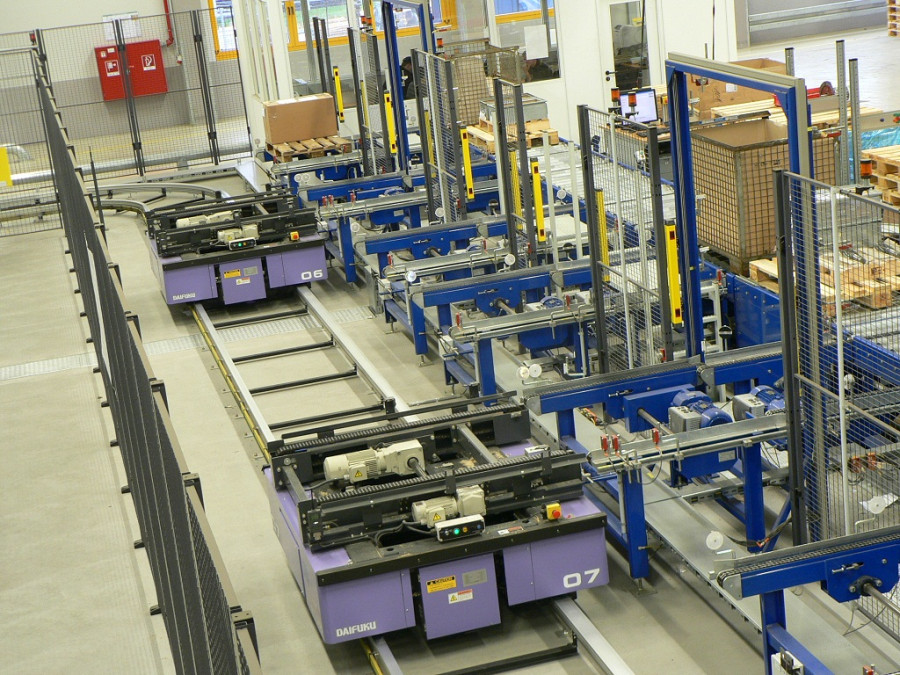
According to the announcement, the procedure is especially applicable to goods whose next destination is already determined upon delivery. For example, pallets can be transported directly to a production line immediately after inspection. Pre-dispatched products can be directly prepared for a customer order.
Packaging materials such as cartons, films, or trays may also be suitable for direct forwarding, provided that the demand at respective consumption points is sufficiently plannable. The key factor is not the largest possible quantity of goods bypassing the warehouse, but the suitability of the particular material flow.
Cross-Docking can reduce movements
Without interim storage, at least the storage and subsequent retrieval of a pallet are eliminated. This reduces the number of necessary goods movements. At the same time, storage spaces are not occupied by products that would only be temporarily stored for a short time.
According to the company, this can shorten throughput times and make better use of existing storage capacities for goods that actually require storage. This can be particularly relevant for products with high turnover or short availability windows.
Not every material flow is suitable
Interim storage may still be necessary if products are only needed irregularly or must undergo extensive quality checks, rework, or consolidation before further use. Therefore, before implementation, a material flow analysis should clarify which goods flows are suitable for cross-docking.
The analysis also serves as a basis for economically evaluating the process. Companies must consider, among other things, how predictable demand and deliveries are, and whether the goods can be clearly assigned to a subsequent process after receiving inspection.
Information Flow Controls Goods Movement
A central prerequisite is the timely availability of the necessary data. For a pallet to be transported immediately after its arrival, the contents and quantity of the delivery as well as the intended destination must be known.
Digital notifications and detection via barcode or RFID can, according to Sysmat, support the necessary transparency. Additionally, the integration of ERP and warehouse management systems plays a role. In the absence of the required information upon delivery, direct forwarding cannot be implemented without additional coordination.
Step-by-Step Implementation Possible
According to the company, cross-docking does not necessarily require a comprehensive automation project. Medium-sized businesses can initially limit the process to specific goods categories or designated suppliers.
Processes for notification, identification, verification, and forwarding need to be defined for this purpose. Based on the experiences gained, the concept can subsequently be applied to other suitable goods flows.
Translated automatically from German.
Branchenverzeichnis