Suche
Newsletter abonnieren
News
Branchenverzeichnis


Sonderhefte/Specials
Shuttle-Profis


Westfleisch relies on the "Load Carrier Management System" from Loopario for food logistics.
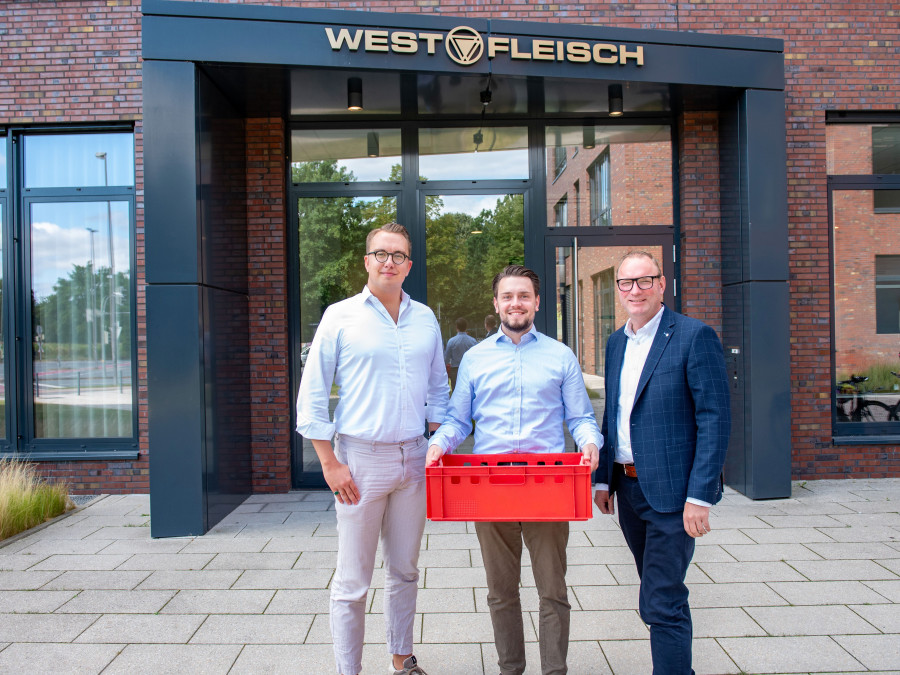
"For us, modern logistics means more than just transportation from A to B. We want to intelligently connect the flows of goods, information, and load carriers and develop Wetralog step by step into an even more data-driven logistics company," says Christian Neekamp, Managing Director of Wetralog. In close collaboration, the logistics company, Westfleisch, and Loopario analyzed the existing processes and developed a clear vision for a seamless digital process.
More Transparency in Complex Cycles
Reusable systems play an important role in the meat industry: In Germany alone, around 85 million E2 crates are in use, with the Association of the Meat Industry (VDF) estimating the number across Europe at around 260 million containers. At Westfleisch, alongside E1 to E3 crates, pallets and numerous other reusable load carriers are also in use. They are distributed with the goods, unloaded at customers or logistics partners, returned, checked, cleaned when in direct contact with goods, and then reused.
So far, information from delivery and return processes has been collected and processed across various established systems and process steps. Particularly in the consolidation and further processing of this information, there existed the potential to further standardize processes and support them digitally. Neekamp explains: "Our aim is to consistently question even established operational processes and to digitize where we can sustainably improve transparency, process quality, and controllability."
A bundled system for all load carriers
The "Load Carrier Management System" (LCMS) from Loopario now provides a digital foundation for all parties in the supply chain: load carrier movements are recorded in a uniform system, inventories are transparently displayed and assigned to the respective customer and empties accounts. This allows both Wetralog and customers and logistics partners to work with the same system and standardized processes. The software can also be seamlessly integrated into the existing system landscape of merchandise management via digital interfaces.
"The collaboration with Westfleisch is an important step for us in the field of food logistics. Especially in this industry, complex reusable cycles meet high demands for hygiene, speed, and transparency – and this is exactly where digital load carrier management can create a decisive added value," says Dr. Philipp Hüning, Co-Founder and CEO of Loopario. "With Westfleisch and Wetralog, we have market-relevant, professional players on our side with whom we can jointly drive this topic forward," he adds.
Load Carrier Management as Part of the Digitization Strategy
Through the digital management of load carriers, employees have more time for value-added activities. The unified data basis also creates the foundation for higher process quality and a forward-looking, resource-saving management of load carrier inventories. Deviations and bottlenecks should be identified and addressed more quickly in the future.
Gradual Rollout Across the Entire Group
The Coesfeld site is the starting point for the implementation of the solution. After the go-live, Wetralog and Westfleisch aim to gather reliable experiences that will be incorporated into further expansion stages. If all set goals are achieved, the system will be gradually transferred to other sites and companies within the group.
Translated automatically from German.
Branchenverzeichnis