Suche
Newsletter abonnieren
News
Branchenverzeichnis


Sonderhefte/Specials
Shuttle-Profis


Warehouse planning: Involve employees in new logistics solutions at an early stage


Technically functioning intralogistics systems do not automatically achieve the planned performance in operation. According to the T&O Group, in addition to the technical design, the organization, the design of work processes, and the qualification of employees play a role. Therefore, the consulting and planning company sees the early involvement of employees as part of warehouse planning.
Incorporate practical knowledge into planning
Employees on-site often know actual work processes, exceptions, and disruptions from their daily practice, as presented by the company. This knowledge should be taken into account during the planning phase. Simply informing the workforce about already established concepts is not sufficient for this purpose.
Instead, the T&O Group recommends involving relevant knowledge holders in the planning process from the outset. This is intended to bring together operational requirements and decisions during the conception phase.
Develop process design parallel to technology
In addition to employee involvement, the company considers the design of work processes as another factor. Even technically efficient automation solutions could fail to achieve their intended performance if responsibilities, knowledge, escalation paths, or representation regulations are not adequately clarified.
This also concerns the integration of information technology. According to the company, it should simplify workflows and ease the burden on employees in the process. If an interface creates additional effort, it could impair usage and operational flow.
Consider special processes already during the design phase
During planning, regularly occurring special processes should be recorded alongside standard procedures. If such processes are not considered during the design phase, this may lead to inefficiencies and additional need for adjustments during operation, according to the T&O Group.
Therefore, the company states that the benchmark for process design is not solely the technical capabilities of a system. The requirements of the employees are also crucial to ensure that work processes can be executed quickly and safely.
Training for Normal Operations and Incidents
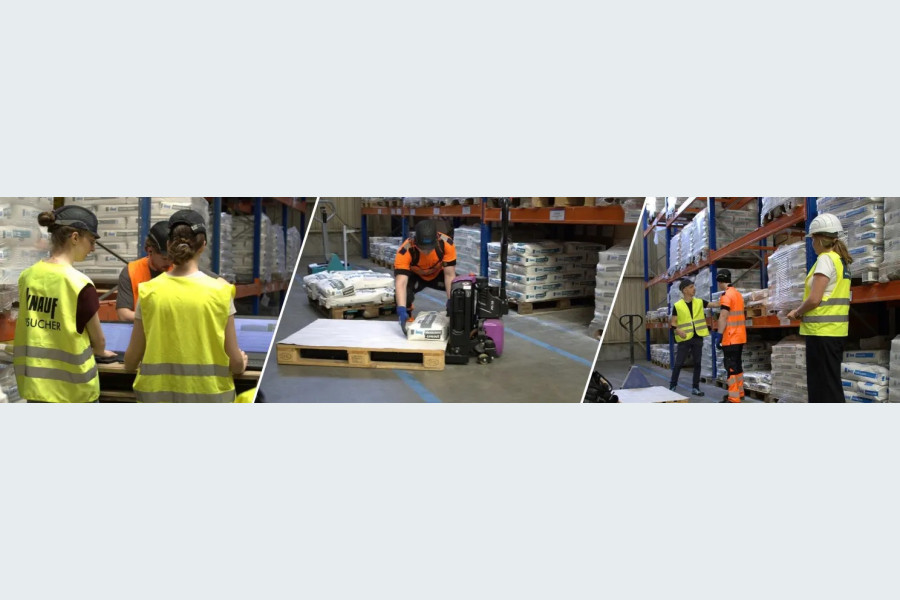
The qualification of employees should also go beyond a one-time training before commissioning. The T&O Group cites recurring training sessions, the use of multipliers within the workforce, and incident training as components of a corresponding concept.
In addition to regular work processes, situations should be considered where processes deviate from normal operations. This ensures that the required knowledge remains available even after the system has been introduced.
Three Typical Mistakes during Implementation
As recurring issues in intralogistics projects, the company cites the late involvement of employees, training as a one-off measure, and process design that occurs only after the decision on technology has been made. If several of these factors converge, technically functioning systems may not achieve their intended performance in operation, according to the T&O Group's assessment.
From its project experience, the company therefore derives a holistic planning approach, where technology, organization, and processes are considered together. The organizational framework conditions should be taken into account during the planning of new logistics solutions.
Translated automatically from German.
Branchenverzeichnis