Suche
Newsletter abonnieren
News
Branchenverzeichnis


Sonderhefte/Specials
Shuttle-Profis


Neura Robotics develops autonomous bed transport for clinics
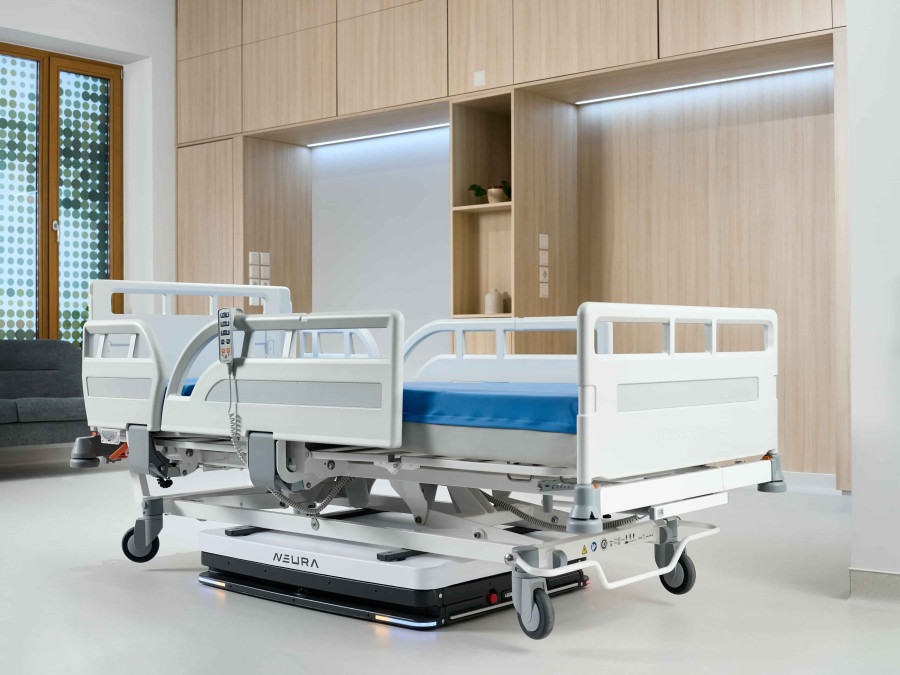
The mobile platform is intended to independently transport empty beds between different stations and floors. The flat-constructed system is designed to be omnidirectional, can rotate on its own axis, and is therefore able to maneuver in narrow hospital corridors and when exiting patient rooms. According to the manufacturer, its safety features remain active even when lifting a bed.
The platform is based on the company's cognitive robotics. It is supposed to perceive its surroundings and continuously learn during its operations. According to calculations by Neura Robotics, with around 20 trips per day, more than 1,300 working hours per year could be freed up for other tasks.
Deployment Aligned with Clinical Conditions
Neura HealthTech aims to align its systems with the requirements of clinical operations. Hygiene and safety are to be considered right from the specification stage. The autonomous platform is designed exclusively for transporting empty beds and is not intended to carry patients.
Before being put into operation, the system is to be validated based on the spatial conditions of the respective facility. According to the company, factors such as corridors, door widths, and elevator dimensions will be considered.
Provision in Rental Model
The marketing is to be carried out through partners as Robotics-as-a-Service. Health facilities will rent the systems at a fixed monthly rate instead of purchasing them. The rental price is to include integration, operation, maintenance, software updates, and continuous readiness. The generated data will be hosted on a European cloud infrastructure.
Translated automatically from German.
Branchenverzeichnis