Suche
Newsletter abonnieren
News
Branchenverzeichnis


Sonderhefte/Specials
Shuttle-Profis


Fotostrecken
"Robo-Hub Logistics": Fraunhofer IML launches research project for AI robotics

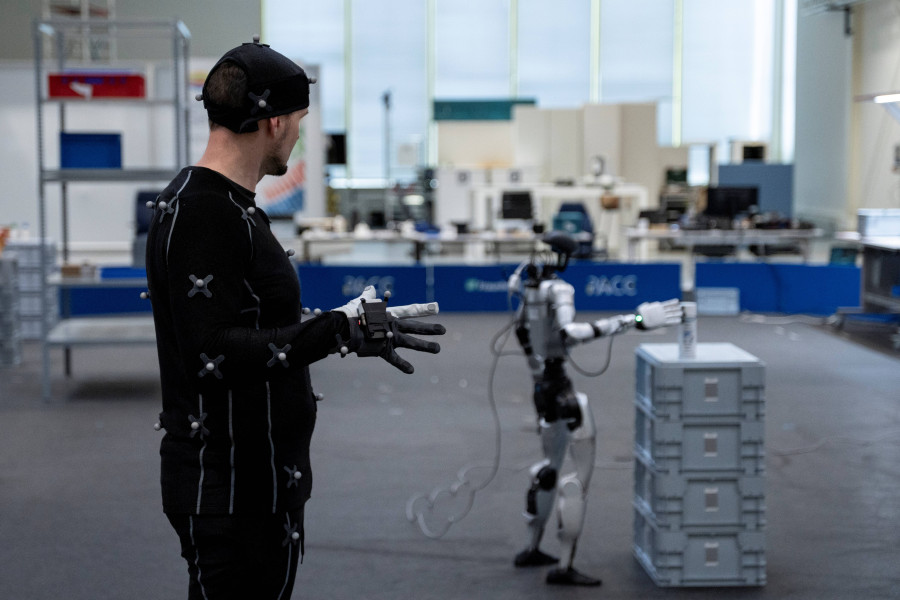
AI Robotics for Complex Logistics Processes
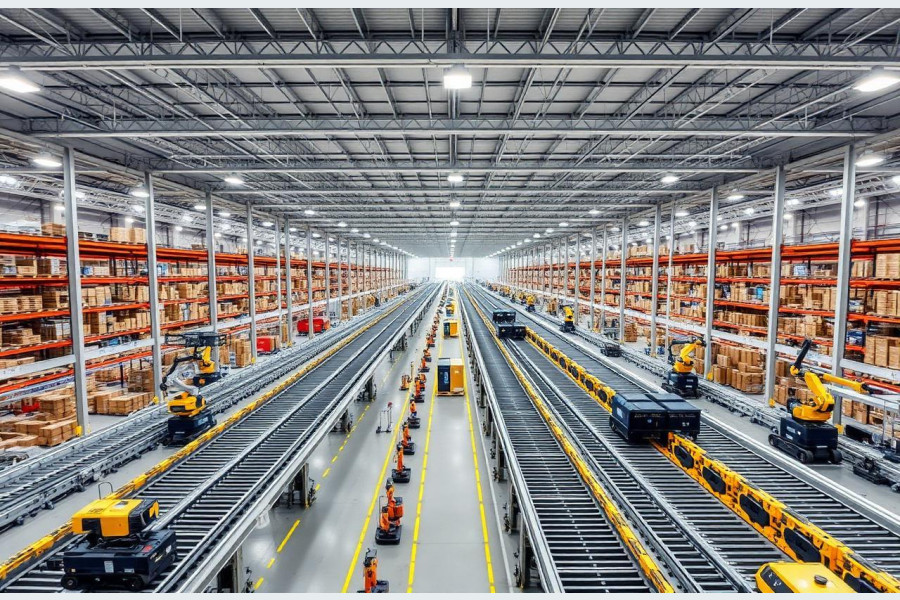
HILA does not focus solely on individual robotic systems. The goal is to create flexibly combinable solutions: from autonomous mobile robots and mobile manipulators to humanoid systems. These should perform different tasks, communicate with operational IT systems, and be able to work reliably even with limited connectivity.
The partners of the consortium, Fraunhofer IML and Fraunhofer IAIS, as well as the universities in Dortmund and Bonn, are focusing on the material flow within warehouses, production sites, and operational areas. Many activities in these areas remain manual, such as loading and unloading trucks, picking a variety of items, handling returns, or performing inspection and maintenance tasks. Particularly challenging are the transitions between indoor and outdoor areas as well as dynamic environments where humans, vehicles, and robotic systems operate simultaneously. Essential topics are therefore AI models for handling diverse goods, the collaboration of heterogeneous robot fleets, secure indoor-outdoor navigation, data spaces and simulations, as well as safety and certification issues.
Real-world Laboratories and Test Fields for Practical Transfer
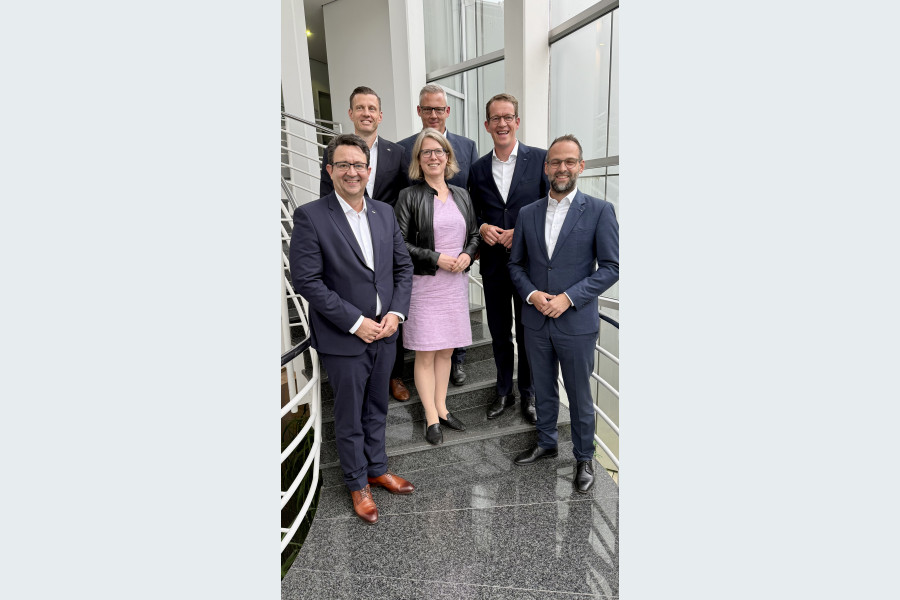
"We are excited to advance our vision of AI-based robotics in logistics with HILA. With our strong consortium, we are starting where standard automation solutions can no longer proceed," emphasizes Prof. Alice Kirchheim, Institute Director at Fraunhofer IML.
During the conceptual phase, the consortium is developing, among other things, an access model for real-world laboratories and test fields, transfer projects based on the principle "test before invest," qualification offers for specialists and executives, as well as approaches for open interfaces and standards. Existing research infrastructures of the partners, including real-world laboratories and simulation environments at Fraunhofer IML, form the starting basis for this. More than 50 companies and organizations have already expressed interest in participating in the emerging ecosystem.
"Anyone working on construction sites or in warehouses carries a heavy load every day. At the same time, many businesses are struggling to find new talent. AI robotics can become a tool here—to benefit both employees and companies. Our goal is not to replace humans with machines, but to make their work easier. North Rhine-Westphalia wants to develop this technology, not buy it, together with our universities and small to medium-sized enterprises. The Fraunhofer IML in Dortmund shows that we can do this. Now we are entering the decisive round," says Mona Neubaur, Minister for Economy, Industry, Climate Protection and Energy of the State of North Rhine-Westphalia.
Research Partners Pool Expertise in Robo-Hub Logistics
By the end of August 2027, a technically, organizationally, and economically viable concept for the establishment and long-term operation of the "Robo-Hub Logistics" is expected to be in place. HILA builds on the expertise of the Lamarr Institute for Machine Learning and Artificial Intelligence as well as the Robotics Institute Germany (RIG). Consortial partners of HILA have already been successfully collaborating on AI projects at the Lamarr Institute since 2022. The Fraunhofer IML and the University of Bonn are already research partners at the RIG’s Cognitive Robotics Lab. Together, these institutions form a powerful hub for logistics in the Rhine-Ruhr area and NRW. The aim of the new collaboration in HILA is to significantly accelerate the transfer of AI and robotics research into logistical practice.
The Federal Ministry of Research, Technology, and Space (BMFTR) is funding the project "Robo-Hub Logistics – Hub for Intelligent Logistics Applications of AI Robotics" (HILA) as part of the initiative "Innovation Labs for AI-based Robotics (Robo-Hubs)" with a total of around 500,000 euros. The project duration ends on August 31, 2027. HILA is coordinated by Fraunhofer IML. Other partners include the Fraunhofer Institute for Intelligent Analysis and Information Systems IAIS, the Technical University of Dortmund, and the University of Bonn.
Translated automatically from German.
Branchenverzeichnis