Suche
Newsletter abonnieren
News
Branchenverzeichnis


Sonderhefte/Specials
Shuttle-Profis


Six new high-lift trucks: This is how Clark grades its lithium-ion series
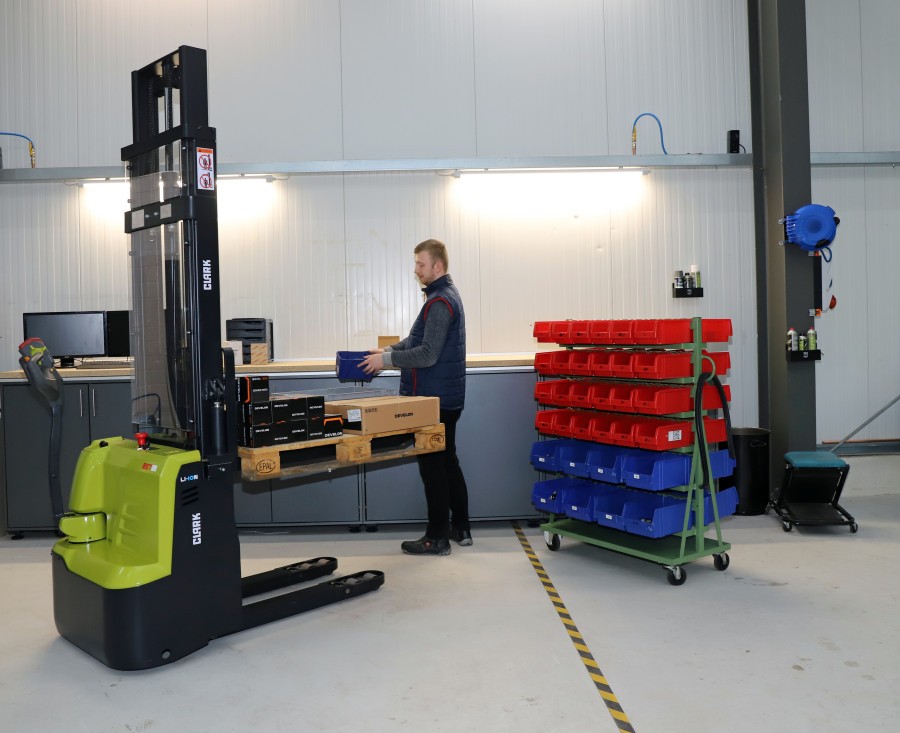


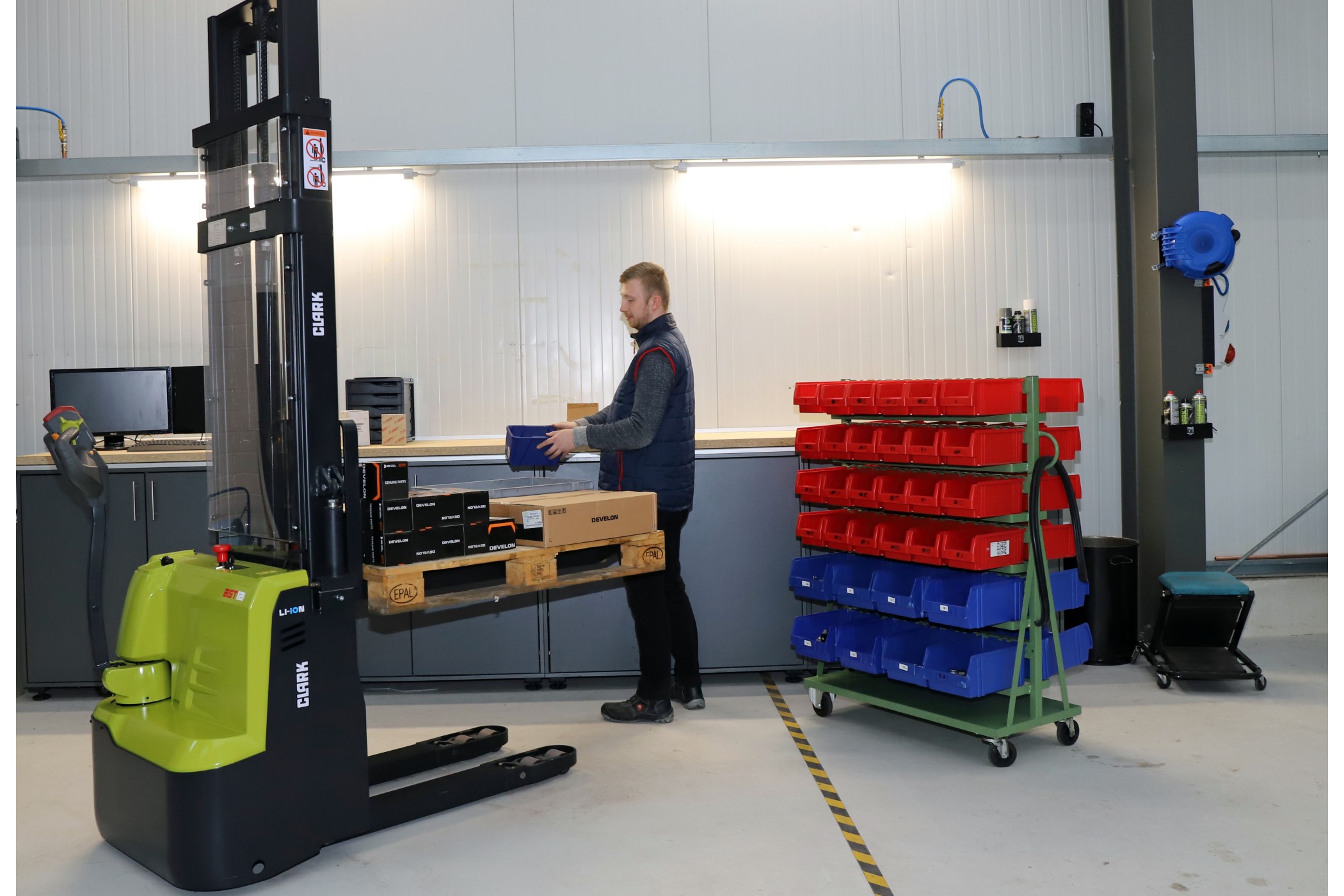

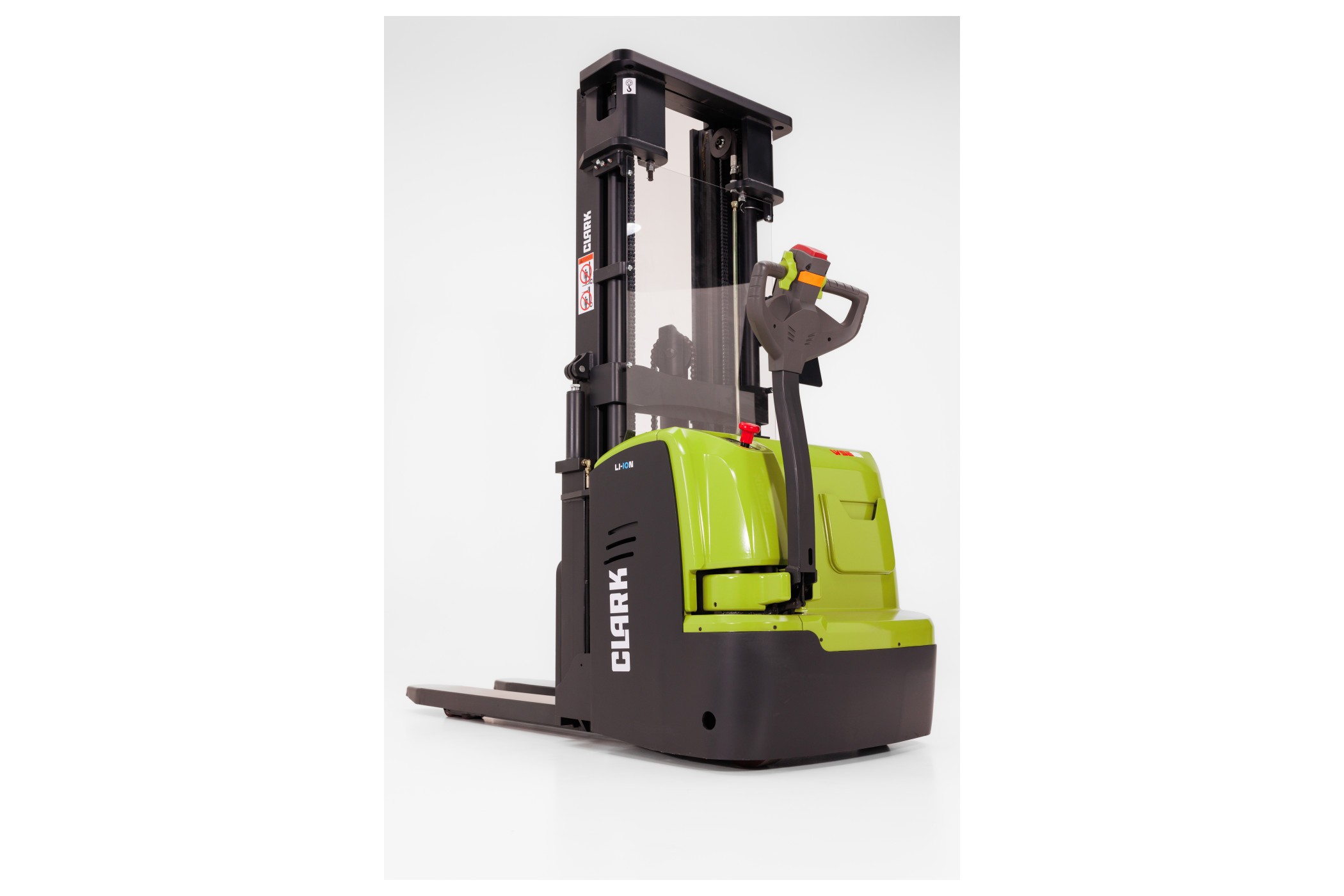




BST12i with Additional Initial Lift
The BST12 and BST12i models are designed for daily use in warehousing, production, and goods distribution. While the BST12 is designed for pallet transport and storage tasks, the BST12i additionally features an initial lift. According to the company, it can transport two pallets with a total load capacity of up to 1,200 kilograms. Both models have a creep speed function, allowing for maneuvering with the tiller raised at reduced speed. A color display integrated into the tiller shows vehicle data. The chassis is based on a four-point support with a low center of gravity and adjustable support wheels.
A maintenance-free lithium-ion battery with 24 volts and 60 ampere-hours provides the energy supply. According to Clark, interim charging is possible. The high-lift trucks can be charged at a 230-volt socket using the integrated charger. An electronic deep discharge protection is intended to protect the battery cells from damage.
WSE16 series reaches 5,600 millimeters lifting height
For higher lifting heights and industrial applications, Clark offers the WSE16 and WSE16i models. Their lifting heights range from 2,500 to 5,600 millimeters. Standard lifting masts up to 3,500 millimeters feature free lift. For greater lifting heights, triplex masts up to 5,600 millimeters with full free lift are available. The WSE16 is intended for classic storage and retrieval tasks. The WSE16i adds an initial lift that increases ground clearance and enables double-deck transport of two pallets. For both variants, fork lengths between 1,070 and 1,600 millimeters are available.
The vehicles are equipped with a creep speed function and a safety tiller positioned at the bottom left. According to the manufacturer, the safety features include AC control with regenerative braking system, a four-point support, an electromagnetic parking brake, an automatic lift cut-off, and overload protection. For diagnosis and maintenance, Clark relies on CAN-bus technology and a one-piece service hood. The motor and brake unit are enclosed and protected against dust and water. For the lithium-ion batteries, operators can choose between 24 volts and 150 ampere-hours with a 50-amp charger or 24 volts and 230 ampere-hours with a 100-amp charger.
RSE16 for longer transport routes
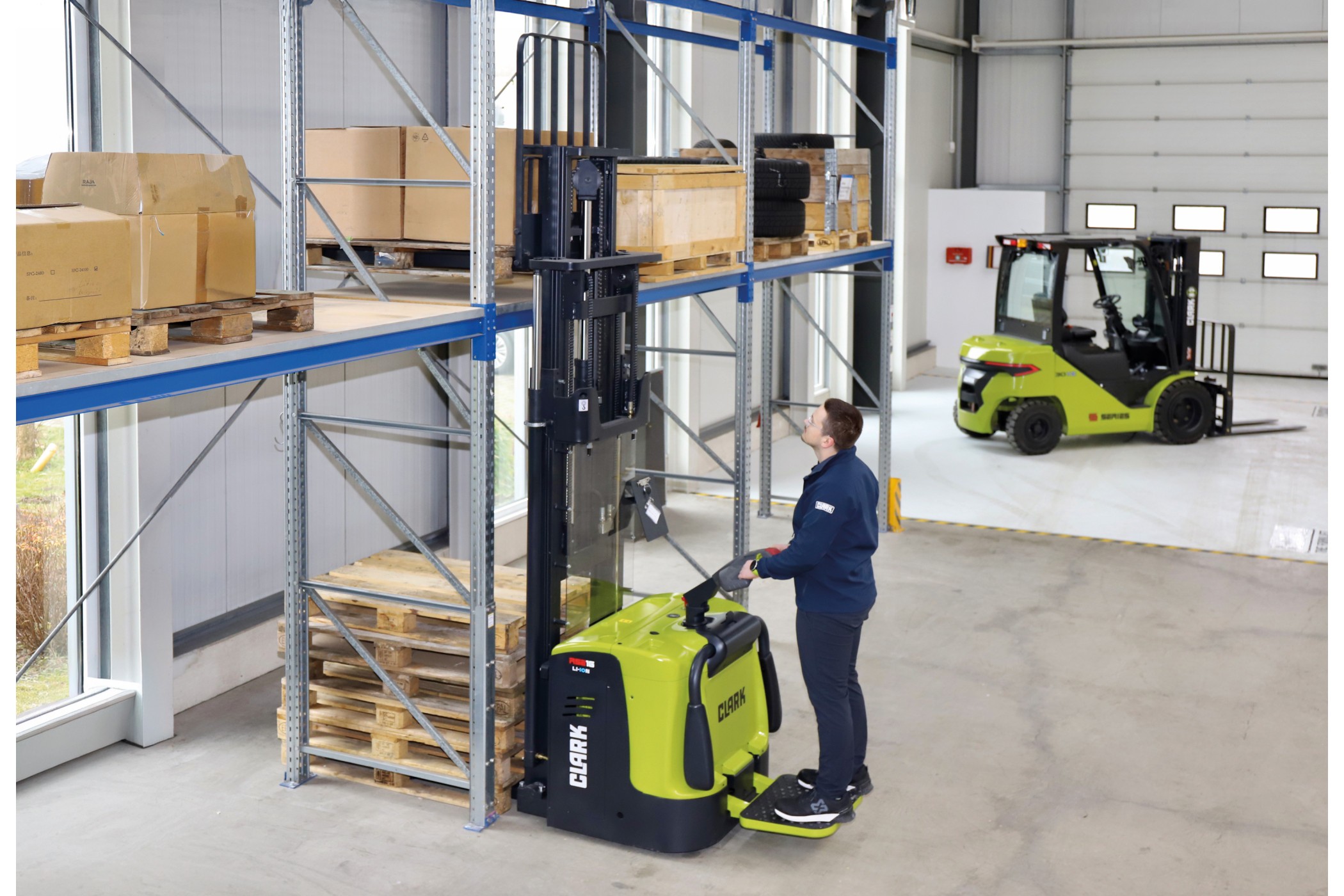
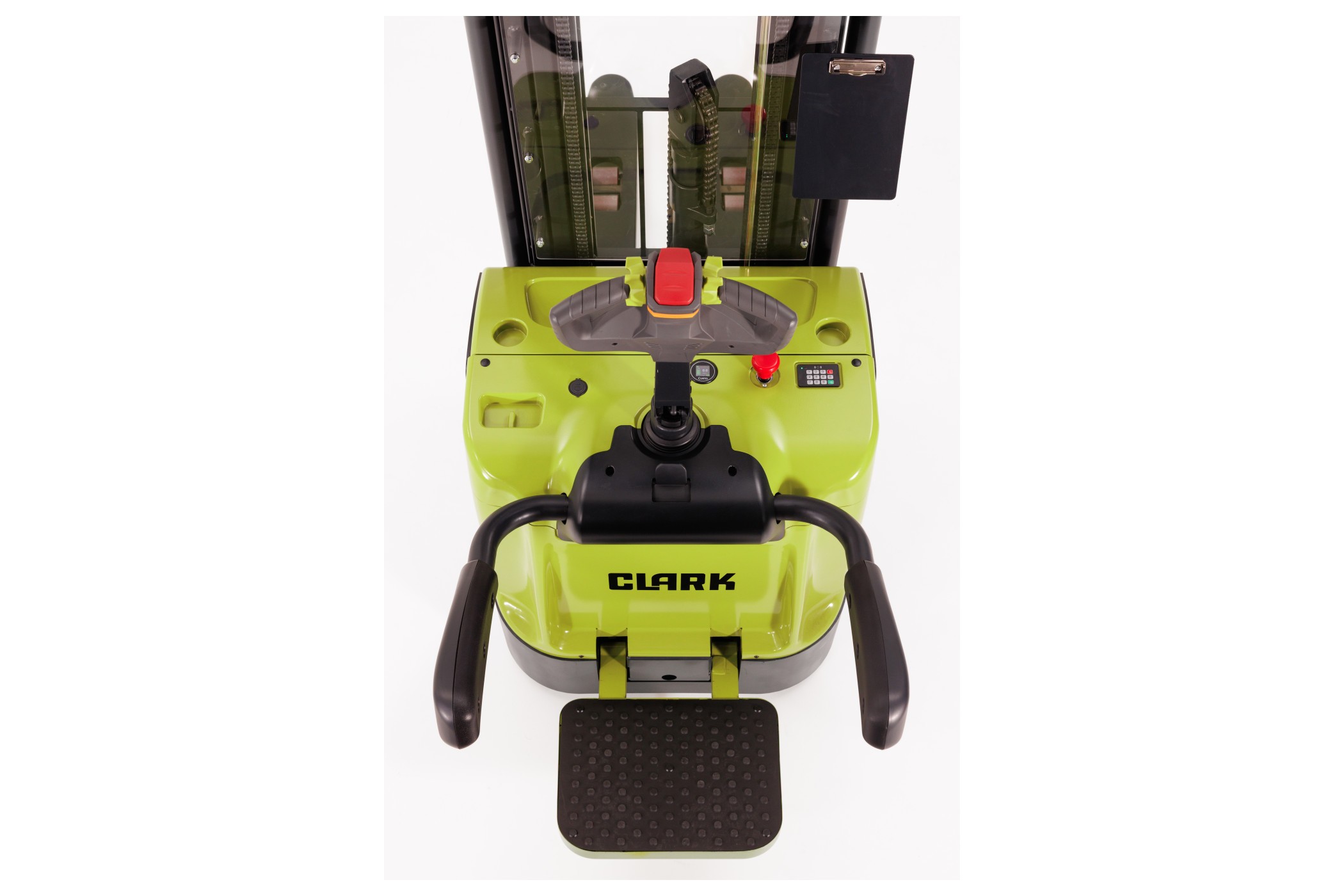
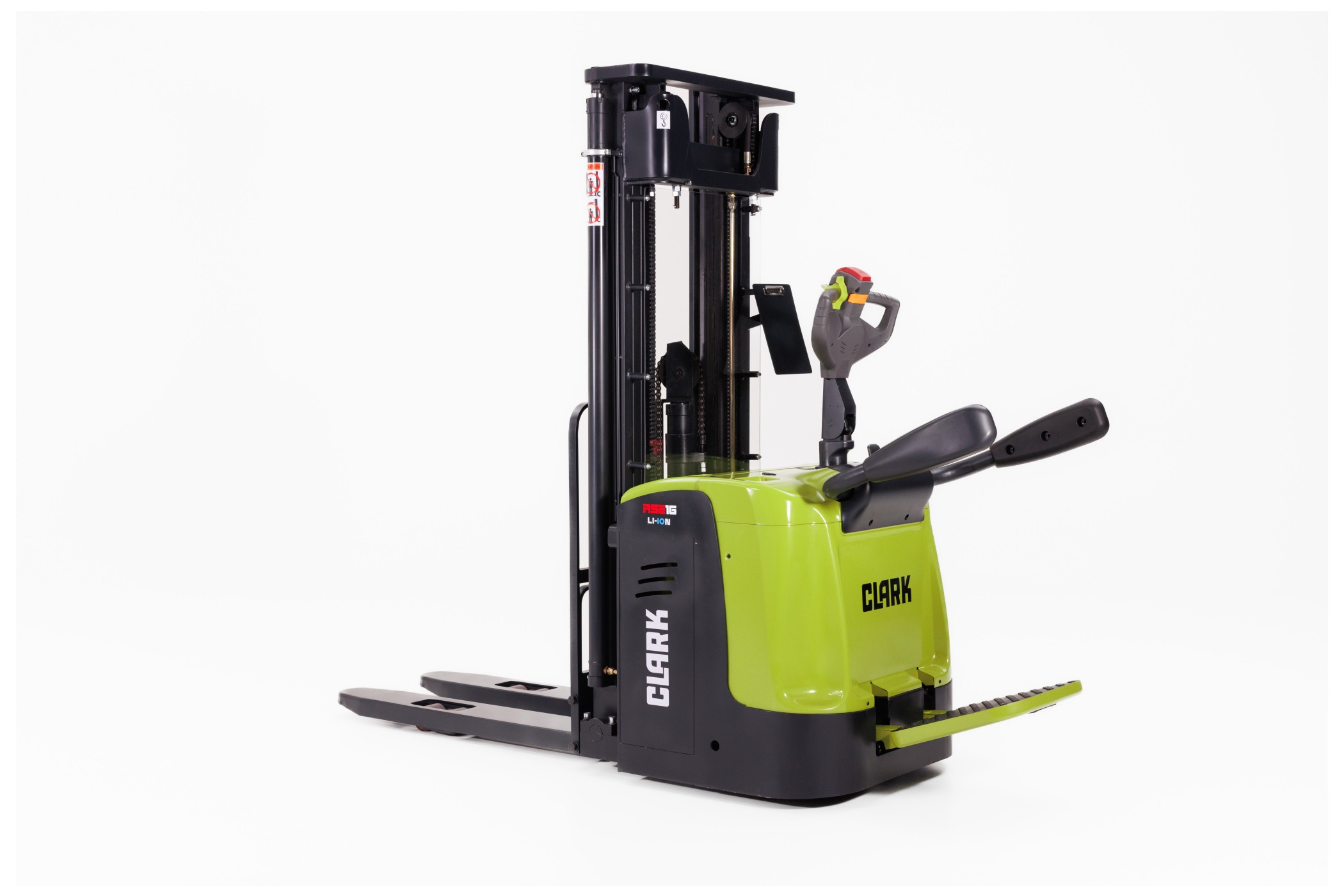
The RSE16 is distinguished by its fold-out driver's platform from the five pedestrian models. Clark has designed the vehicle for longer internal transport routes. The cushioned platform has a step height of 175 millimeters. Side safety rails can be adjusted to two heights. For maneuvering tasks in pedestrian mode, a creep speed function is also available. A multifunction color display provides information about the vehicle status. The standard masts reach lift heights from 2,500 to 3,500 millimeters. Alternatively, triplex masts up to 5,600 millimeters are available.
The safety features of the RSE16 include an electromagnetic parking brake, an automatic braking system, a safety override switch, and a lift cut-off. CAN bus technology also supports error diagnosis in this model. The encapsulated motor and brake unit is protected against dust and water. For multi-shift operations, 24-volt lithium-ion batteries with 230 or 300 amp-hours are available. Both variants are offered with an external 100-amp charger. The available fork lengths range from 1,070 to 1,600 millimeters. A document holder is part of the standard equipment, while scanner and stretch film holders are optionally available.
Translated automatically from German.
Branchenverzeichnis