Suche
Newsletter abonnieren
News
Branchenverzeichnis


Sonderhefte/Specials
Shuttle-Profis


Fotostrecken
New warehouse technology from Linde: Up to 40 meters in height and 600 order positions per hour

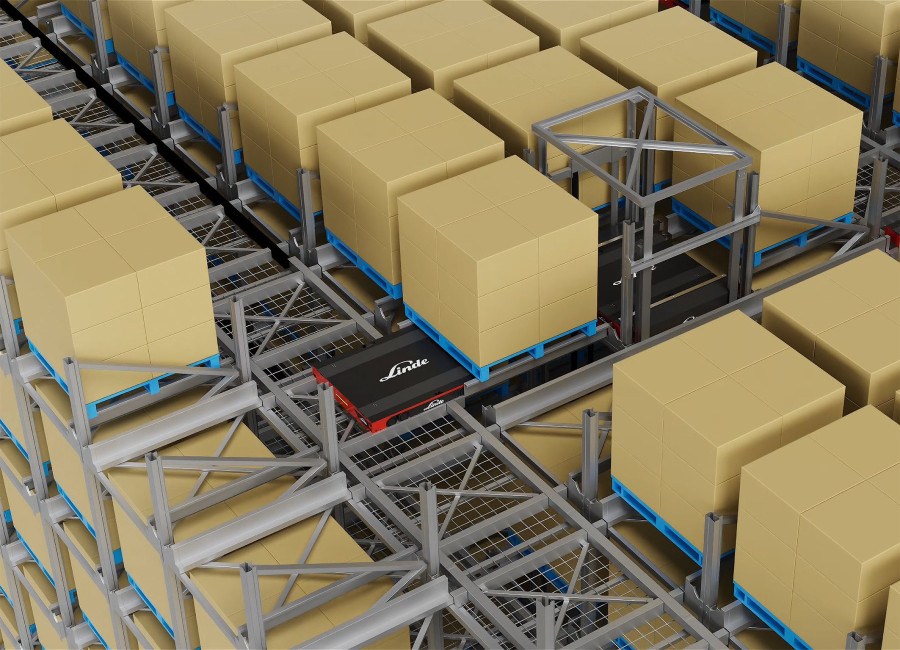
Linde Material Handling is launching two scalable warehouse automation systems. With the "Linde S-Matic cube" for pallet storage and the "Linde S-Matic bin" for small parts storage and picking, the company from Aschaffenburg is expanding its range for automated warehouse processes. Both solutions are designed to enable high storage density and can be gradually expanded as capacity or throughput requirements increase. The manufacturer announced this today, November 23, 2026.
Pallet storage with horizontal and vertical shuttle transport
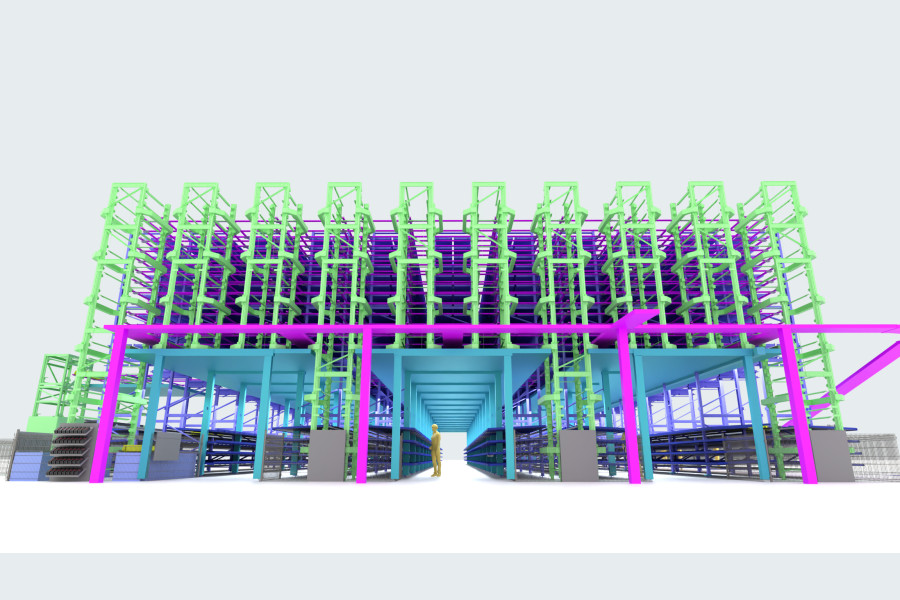
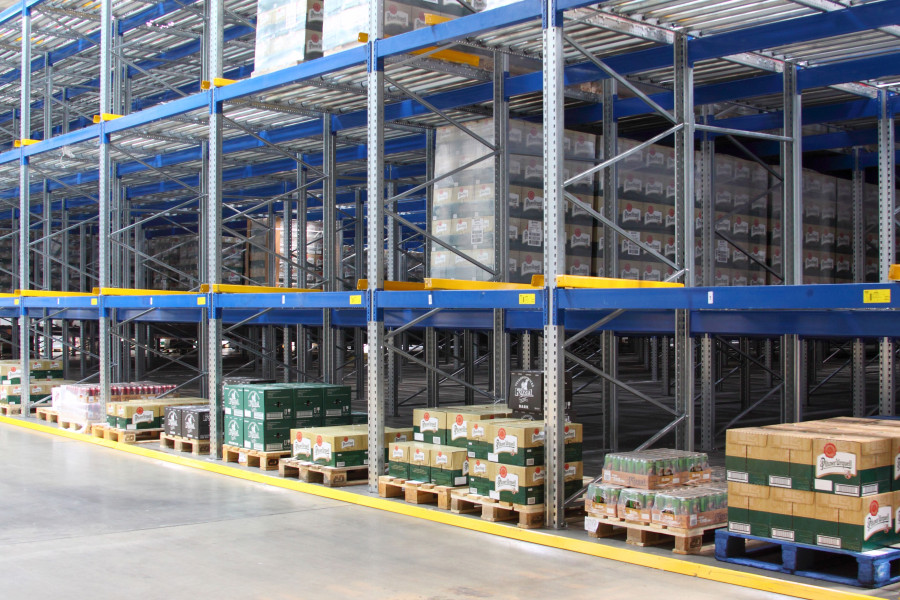
The Linde "S-Matic cube" is an automated shuttle system for pallets weighing up to 1,500 kilograms. The facility consists of a rack structure in which four-way shuttles handle the horizontal transport of load carriers within a storage level. Two-way shuttles move the pallets between the individual levels, thus replacing conventional elevator solutions.
According to the manufacturer, the shuttles only require the floor space of a pallet for their movements. This is intended to achieve high storage density. The construction can also be adapted to different building dimensions and storage requirements. The system provides for two independent options for subsequent expansion. Additional shuttles increase the possible throughput, while more storage channels create additional pallet storage spaces. Companies can thereby increase transport performance without having to simultaneously expand storage capacity.
Installation also possible in existing buildings
Linde Material Handling has designed the pallet storage system for integration into existing logistics properties. According to the manufacturer, a standard concrete floor is sufficient for the installation. Since the shelf construction is self-supporting, it does not require a load-bearing building shell. Installation can be possible with an existing ceiling height of eight meters. Depending on the respective project requirements, systems with up to ten superimposed storage levels and a height of 40 meters can be realized.
The company also names deep-freeze storage as another application area. The high storage density reduces the air volume that needs to be cooled. This can reduce the energy demand of the refrigeration system and thus the ongoing operating costs. The system architecture is also supposed to offer advantages in maintenance. The shuttles are designed redundantly, so the exchange or maintenance of individual vehicles does not require a complete shutdown of the storage facility. According to the manufacturer, the shelf construction is designed for decades of operation. Worn shuttles can be replaced individually.
Artificial intelligence supports storage allocation
For the control of the pallet warehouse, Linde Material Handling relies on the software "Linde Warehouse Manager." This includes a storage allocation strategy based on artificial intelligence. It determines suitable storage locations and is intended to optimize occupancy within the shelf construction.
The software aims to avoid unfavorable storage configurations that could complicate subsequent retrieval operations. The retrieval processes are also controlled by appropriate algorithms. This is intended to efficiently utilize the available transport capacity of the shuttles. Through interfaces, the system can be connected to existing enterprise resource planning and warehouse management systems. The integration also includes data exchange with upstream and downstream material flow processes, for example with automated vehicles or manually operated industrial trucks.
Three Variants for Picking Connection
For further transport of pallets from the shuttle warehouse, the manufacturer provides three different concepts. One option is the transfer to stationary conveyor technology via roller conveyors. Alternatively, ground vehicles can immediately take over the provided pallets. This also includes laser-guided driverless transport vehicles.
In the third variant, the picking area is located below the actual pallet warehouse. The racking structure is correspondingly elevated. Autonomous mobile robots take over the provided pallets at the lower level and transport them to the picking workstations. The pallet warehouse above serves as a buffer warehouse in this configuration. Shuttles can supply necessary pallets from the upper levels. According to the manufacturer, this allows storage and picking to be combined on the same footprint.
Small Parts Warehouse Combines Storage and Mobile Robots
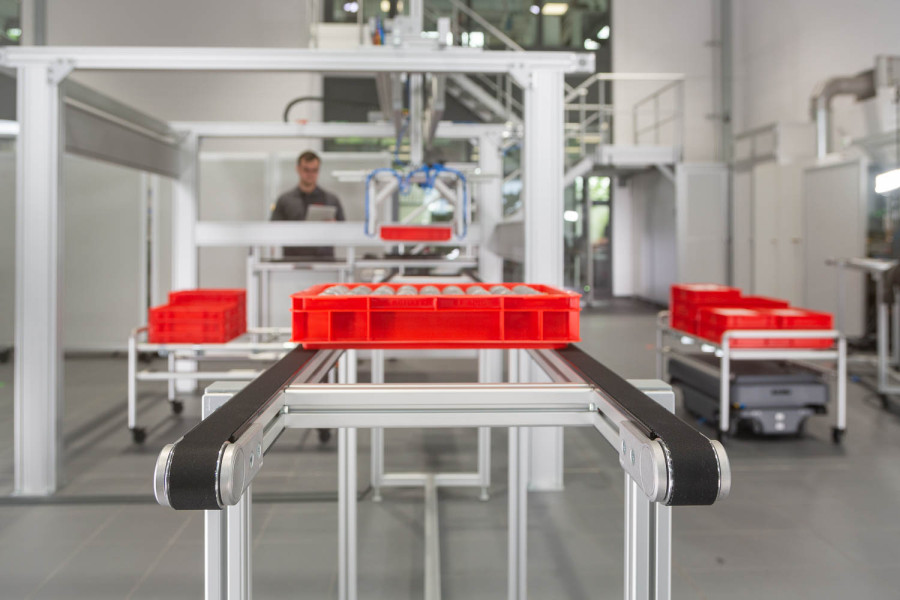
With the Linde "S-Matic bin," the company also introduces a system solution for automated small parts storage and picking. Unlike systems with continuous stationary conveyor technology, the transport of removed containers to the workstations is carried out by mobile robots.
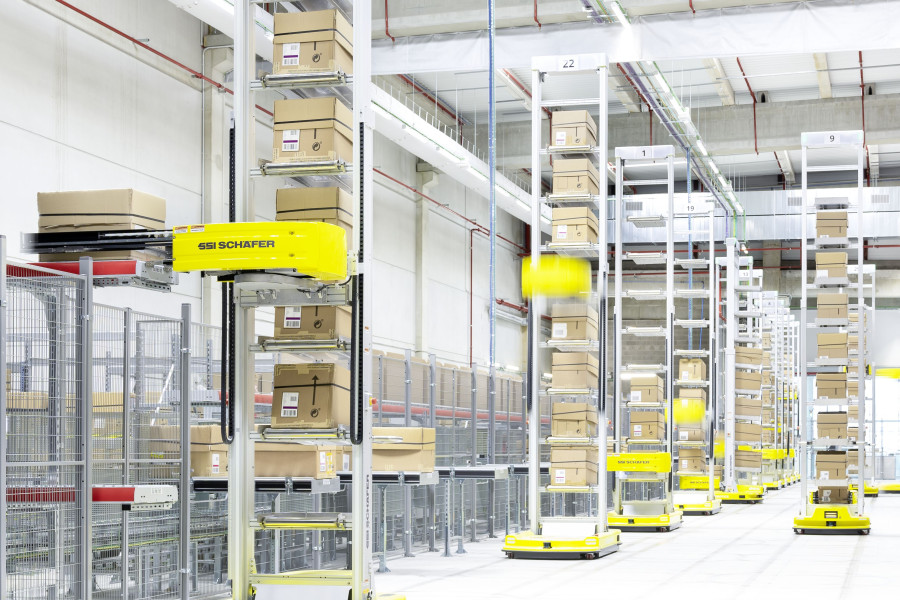
The system consists of small parts storage and retrieval machines that move along the shelves to store and retrieve containers. Then, mobile transport robots, called Bin Movers, take over the containers and transport them to the workstations via flexible routes. The workstations can be designed for different processes. These include manual picking from one container to another, exchanging full for empty containers, as well as combined picking processes with containers and pallets. Further configurations allow connection via picking walls, shelves, or conveyor belts.
Up to 600 order positions per hour and station
The small parts solution is designed for shelves up to twelve meters high. Containers can be stored up to five times deep. Depending on the application and process design, the system, according to the manufacturer, achieves a performance of 400 to 600 order positions per hour and station. Compared to manual picking systems, Linde Material Handling quantifies the possible capacity increase at up to 300 percent. The announcement does not clarify which process configuration and output this figure is based on.
The mobile Bin Movers reach a speed of up to 4.5 meters per second. According to the manufacturer, they can operate for up to eleven hours on a single battery charge. Since they transport the containers between the shelf area and the picking station, fixed conveyor technology for this transport section can be dispensed with.
Flexible expansion with increasing order quantities
The Linde "S-Matic bin" can be expanded with additional mobile robots when throughput or picking quantities increase. According to the manufacturer, the other system components are also designed for a step-by-step expansion. The solution also features a software environment for integrating and controlling the involved components.
Various gripping technologies are available for handling different load carriers. Cartons, containers, and trays with dimensions up to 800 millimeters in length and 600 millimeters in width can be processed. Linde Material Handling specifically mentions medium-sized companies, logistics service providers, and e-commerce providers as potential users. The system is intended to be suitable for warehouses with a high variety of items and variants as well as fluctuating order quantities.
Translated automatically from German.
Branchenverzeichnis