Suche
Newsletter abonnieren
News
Branchenverzeichnis


Sonderhefte/Specials
Shuttle-Profis


Fotostrecken
PPWR changes requirements for warehouse automation

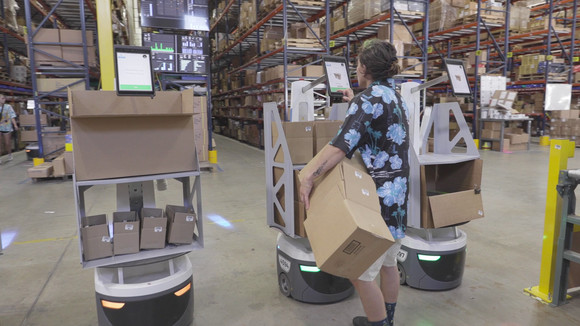
The PPWR applies directly in all member states of the European Union. However, numerous requirements become effective in stages over time. For conversion, transport, and e-commerce packaging, the regulation specifies a maximum void ratio of 50 percent. The rule applies from January 1, 2030, or three years after the corresponding implementing acts come into force, whichever is later.
The European Commission must establish the calculation method for the void ratio by February 12, 2028. The general requirement for the recyclability of packaging has been in effect since August 2026. However, specific criteria for recycling-friendly packaging design and classification into recycling classes will not be binding until at least 2030.
This results in a long-term planning task for warehouse operators. Manufacturers can develop different packaging solutions to meet regulatory requirements. This could change packaging dimensions, material properties, and the handling of individual items.
Changed Packaging Influences Gripping Processes
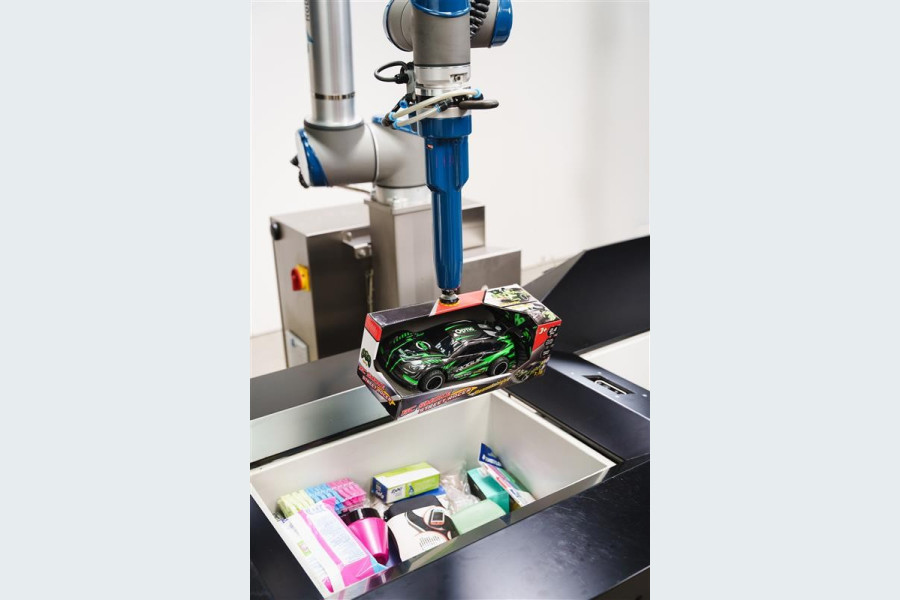
For automated picking systems, changes in packaging can bring additional requirements. Rigid cartons, flexible pouches, and porous materials differ in terms of their mechanical properties and the possibilities for robotic handling.
The position of an item within a container also influences the gripping process. Products can be positioned at an angle, deform, or be partially obscured by other items. Automated systems must recognize such situations and select appropriate gripping strategies.
In addition to the mechanical construction of the gripper, sensor technology, visual object recognition, and software-supported motion planning are therefore gaining importance. The crucial factor is whether a system can reliably pick up different items without requiring a new technical adjustment for every change.
Locus Robotics relies on adaptive gripping technology
One approach to handling different item profiles is the adaptive gripping technology "Neuragrasp" from the provider Nexera. According to Locus Robotics, the technology is integrated into the automation platform "Locus Array".
"Neuragrasp" combines artificial intelligence, sensors, computer vision, and an adaptive membrane structure. The system is designed to adapt to different item geometries, surfaces, materials, and porosities. This aims to enable the automated handling of a wider range of items.
Unlike rigid gripping concepts, the focus here is on adapting to changing object properties. For operators of automated warehouses, it is particularly relevant whether such systems can maintain consistent performance even with changes in the range of items and packaging forms.
The success rate of gripping alone is not enough
In addition to the technical handling capability, the management of failed gripping attempts affects the performance of automated picking systems.
A first attempt success rate of 99 percent means, with 2,000 gripping attempts per hour, mathematically 20 attempts where an item is not successfully picked on the first try. Whether this leads to manual interventions or additional process steps depends on the system's ability for automatic error detection and handling.
A system can, for example, initiate another gripping attempt or redirect an unsuccessfully processed order into an appropriate process. If these functions are lacking, handling such exceptions can require additional personnel effort.
For the evaluation of robotic picking systems, it's therefore not sufficient to consider only the first attempt success rate. Equally relevant is the number of required repeat attempts, the proportion of automatically handled exceptions, and the extent of manual interventions.
Performance stability becomes an investment criterion
Established metrics of warehouse automation include the number of picking operations per hour and the coverage of different item numbers. However, these values only describe a part of the operational performance.
For long-term automation investments, the question of how performance develops under changing operating conditions is becoming more important. New packaging forms, additional items, and changing order structures can mean that a system must operate outside the originally intended operating conditions.
An evaluation should therefore also consider how frequently human interventions are required and to what extent performance changes with shifts in the product mix. Equally relevant is the effort required for adjustments to new products and packaging.
This broadens the view from the technical feasibility of automating individual gripping tasks to the stability of the entire picking process.
Adaptability also concerns warehouse management
Changes in item and order profiles do not only affect the gripping technology. They can also necessitate adjustments in order prioritization, capacity distribution, and coordination of automated resources.
Besides the physical handling of different items, the overarching management of personnel, orders, and robotic systems is therefore gaining importance. An appropriately designed automation infrastructure should be able to depict changing requirements within existing processes.
The PPWR is only one of several factors influencing the long-term operation of automated warehouses. Changes in product range, new customers, and altered order structures can also change the original planning foundations.
For investment decisions, this results in the necessity of not only evaluating the current picking performance. Operators must also consider how reliably an automation system works with changed packaging and items, and what technical and personnel adaptation effort arises.
Translated automatically from German.

Branchenverzeichnis